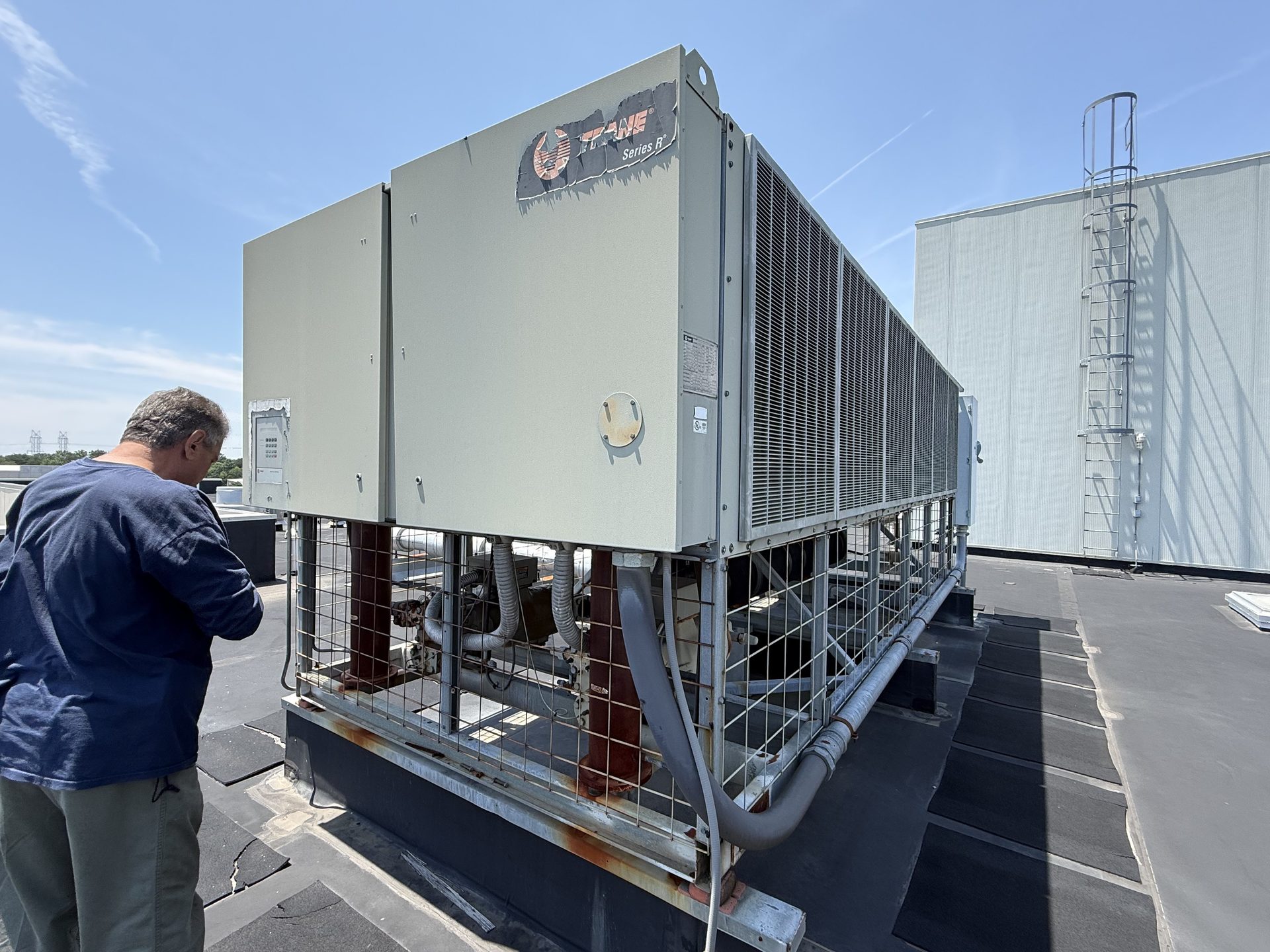
York Chiller Buyers in Kenner, Louisiana
From surplus unit to removal
Have a used York chiller in Kenner, Louisiana to remove? We are chiller buyers, and a test run is not required to request an upfront cash offer. The buyer handles crane service, rigging, disconnects, refrigerant recovery, loading, hauling and freight. Share the machine's visible details and the site's known restrictions so the work can be coordinated with authorized personnel.
Separate the unit from its surroundings
An equipment name may describe heat rejection, a compressor, or a modular system rather than the complete installation. Share exterior pictures of the whole machine, visible connections and any separate controls. Indicate which components are included and which must remain. If you are unsure whether the unit is air-cooled, water-cooled or configured another way, leave that question open for review.
Match the plate to the equipment
Share a clear photo of the York unit nameplate and any separate compressor or starter identification plates that are safely visible. Separate identification plates can help distinguish the main machine from a starter or compressor. Photograph only what is visible without opening cabinets; leave an unreadable field blank rather than copying a number from a different component.
Cooling tons and transport size
When a record says tons, ask whether that figure describes cooling output for one unit or for a group. It is not the load weight for rigging. Supply physical dimensions and a documented shipping or operating weight if known, and specify whether protrusions and separate cabinets are included. If the document does not say, let the buyer know rather than filling the gap with an estimate.
Power and separate controls
Power information belongs in the inventory even when the chiller is already idle. Share a safe photo of the rating plate and existing electrical drawings if available; identify separate controls and missing information. The buyer handles electrical disconnects through qualified personnel, coordinated with the site's authorized staff. The seller should not switch, probe or dismantle electrical components to prepare for an offer.
Which components belong to the chiller?
Describe the visible compressor and condenser arrangement and identify any separate starter or control cabinet included with the sale. A cabinet next to the machine is not necessarily included, and controls may serve other equipment. An inventory that says what stays and what goes helps the buyer plan the scope with the facility's authorized representative.
Location and site access
The regional context for Kenner includes western greater New Orleans and the airport-side I-10 corridor. It is in Jefferson Parish. For an airport-area property, ask the site about delivery entrances, security and operating-hour restrictions rather than assuming truck access. Give the street address and the unit's position on the property; a regional highway does not establish which gate, route or loading area can be used at that site. If a separate starter or control is included, show where it sits relative to the chiller and the path to the loading area.
Refrigerant records and recovery
If the refrigerant is unknown, say so rather than guessing from the make or compressor type. A photo of the original plate, any later conversion label and existing service notes gives the recovery team a starting point. Recovery is handled by the buyer's appropriately qualified personnel; the seller should neither open the circuit nor vent or mix its contents.
Coordinate with the facility
A chiller can be surplus while nearby systems remain essential. Ask the authorized facility representative to identify protected services, shared controls and the people who can approve access. The buyer arranges the work and coordinates the plan with the site, including any qualified disconnect and recovery personnel. Treat timing as subject to actual site approval, not a guaranteed removal date.
Separate the scope from the assumptions
Provide the unit dimensions, documented weight and model-specific rigging information if available; a rigger should confirm the lifting plan. Measure the outside envelope only where it is safe to do so, and distinguish a documented weight from an estimate. A qualified rigger evaluates actual lifting points, obstructions and component separation; the brand name is not a lifting plan.
Openings, turns and overhead limits
A rooftop, basement, mechanical room and fenced yard each create different access questions. Provide the actual building and unit location, any known opening dimensions and a safe photo of the route. Mention screens, parapets, overhead services or a tight corner if present. Site restrictions should be confirmed with authorized staff rather than inferred from a map or from the machine's size.
Plan the lift around the site
If the machine must pass through a building opening or over a parapet, show the riggers the relevant route and any measurements already on file. Provide the unit-specific lifting documents and known weights where available. The buyer arranges crane and rigging services; the professional team decides on lifting points and whether an approved component separation is needed.
Where can the truck load?
If a unit or separate cabinet has to be staged before loading, tell the buyer what space the facility can make available and any restrictions on its use. Share measurements, documented weights and the route through the gate. The buyer arranges loading, hauling and freight; its personnel assess whether the proposed route and vehicle access are workable for the actual load.