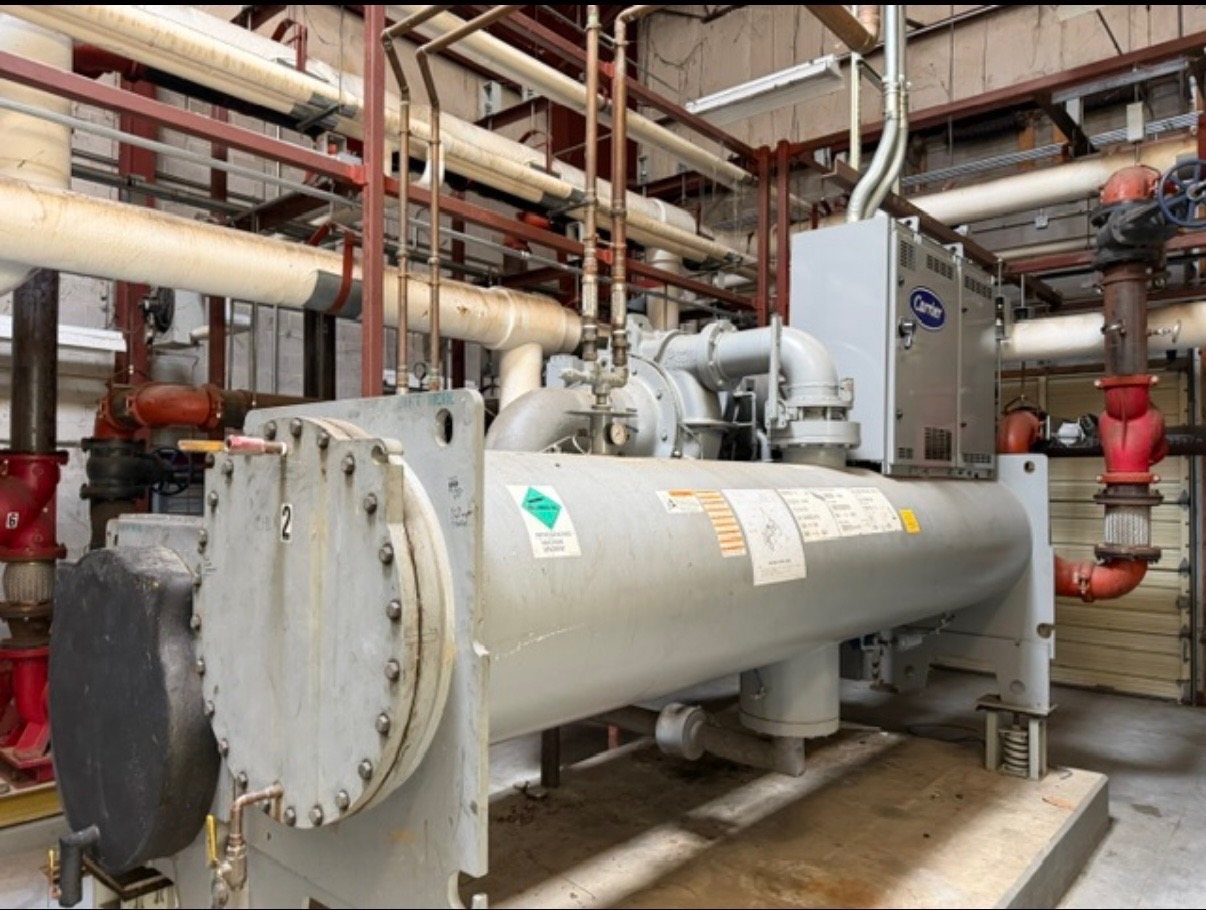
Aaon Chiller Buyers in Houma, Louisiana
A practical way to start
If you have a used Aaon chiller in Houma, Louisiana, we buy chillers rather than sell them. Share what you know for an upfront cash offer; no equipment testing is required. The buyer handles crane service, rigging, disconnects, refrigerant recovery, loading, hauling and freight, coordinating qualified personnel with the site. A precise inventory and an honest account of access restrictions help shape the removal plan.
Where the equipment sits
The regional context for Houma includes the coastal Bayou Region and south Louisiana waterways. It is in Terrebonne Parish. Coastal exposure may be relevant to an individual unit's visible condition; describe corrosion only where actually observed, and identify the site's road access. Give the street address and the unit's position on the property; a regional highway does not establish which gate, route or loading area can be used at that site. If a separate starter or control is included, show where it sits relative to the chiller and the path to the loading area.
Agree on the work boundaries
A chiller can be surplus while nearby systems remain essential. Ask the authorized facility representative to identify protected services, shared controls and the people who can approve access. The buyer arranges the work and coordinates the plan with the site, including any qualified disconnect and recovery personnel. Treat timing as subject to actual site approval, not a guaranteed removal date.
Match the plate to the equipment
Share the Aaon equipment nameplate and identify the item as a chiller or chiller module rather than assuming from the brand alone. Equipment bearing a familiar name is not necessarily a chiller. A photo of the entire assembly and any visible water connections helps distinguish the item being offered; if its function is unclear, describe the uncertainty rather than guessing.
What remains connected?
Do not assume a nearby pipe can be drained just because the chiller is surplus. Other equipment may use the same loop, and a process line can require site-specific precautions. Share existing labels and drawings, or note that the contents are unknown. The buyer handles the disconnect work with qualified personnel and the facility's authorized team.
Power and separate controls
Provide the voltage, phase and frequency listed on an accessible nameplate or equipment schedule, if legible. Note any separate starter, drive or control enclosure and whether it is included or shared. Do not open a panel or handle wiring to collect these details. The buyer coordinates qualified disconnect personnel with authorized site staff, who identify isolation boundaries and any equipment that must remain energized.
Which components belong to the chiller?
Photograph visible compressor sections, condenser coils and water connections to help establish the unit configuration. These views help establish what is actually present without assuming a particular compressor or condenser arrangement. Mention any separate module or control cabinet, and specify which pieces the owner intends to include.
Labels, history and safe recovery
Tell the buyer whether a refrigerant designation comes from a nameplate, a later conversion label or a service record. If the source is missing or the charge is unknown, say that plainly. The buyer handles recovery with qualified personnel. There is no reason for the seller to fit gauges, open a valve, mix refrigerants or release any contents.
Cooling tons and transport size
A truck and crane are selected around the real load, not the chiller's rated cooling tons. Send available length, width, height and documented weight for the machine and for any separate included enclosure. Also share the nameplate capacity so the buyer can identify the equipment. It is fine to say that dimensions or a weight still need confirmation.
Plan around the installed machine
Note whether the unit is roof-mounted or at grade, and share access dimensions and any available lifting instructions. The location matters independently of cooling capacity: an elevated unit may need a different lift approach from a machine on a pad. Share the route to the loading area and any overhead restrictions for the buyer's assessment.
From the chiller to the loading area
The first obstacle may be inside the building rather than on the road. Tell the buyer where the unit sits, how it is reached and where a truck might be allowed to load. Identify narrow openings, overhead obstructions and any restricted travel paths from existing measurements. The buyer's professional team verifies the route and determines the handling plan for the specific equipment.
Information for the rigger
A clear ground-level view does not guarantee a clear lift: overhead services, structural limits and the available crane position also matter. Send the buyer what the site knows about those constraints, along with documented dimensions and weight. Professional riggers arranged by the buyer develop the equipment-specific plan. Do not tie on lifting gear or attempt to shift the chiller yourself.
From staging to hauling
After the machine leaves its installed position, it still needs a safe staging place and a truck-accessible loading area. Share the location of gates, internal roads and any known overhead or vehicle restrictions. The buyer coordinates loading, hauling and freight. The freight team will evaluate the actual load dimensions and route rather than assuming that a nearby highway solves access inside the property.