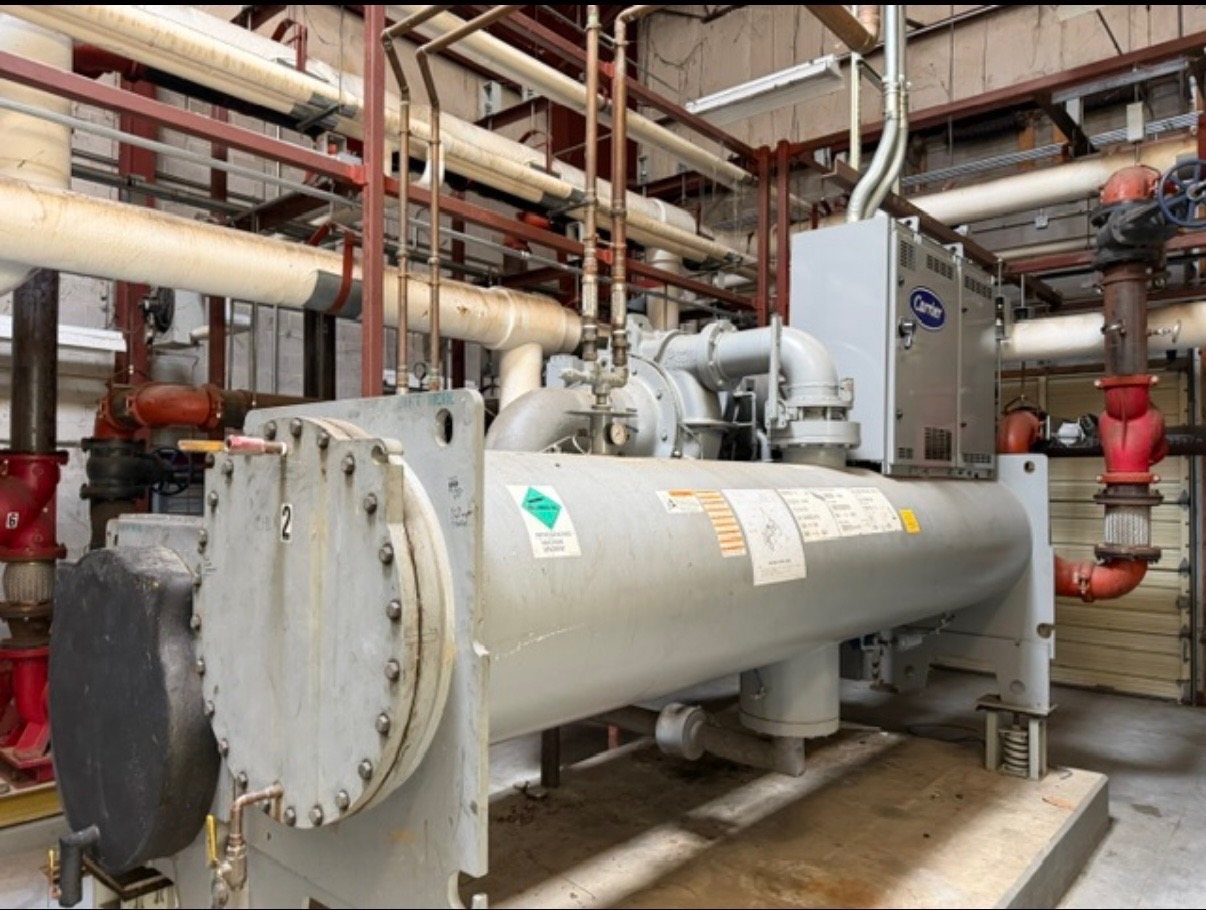
Water-cooled Chiller Buyers in Houma, Louisiana
A buyer for your chiller
Have a used water-cooled chiller in Houma, Louisiana to remove? We are chiller buyers, and a test run is not required to request an upfront cash offer. The buyer handles crane service, rigging, disconnects, refrigerant recovery, loading, hauling and freight. Share the machine's visible details and the site's known restrictions so the work can be coordinated with authorized personnel.
Access starts at the unit
Describe the path from the machine to a loading area, not just the mailing address. Note the floor or roof, door widths, turns, overhead pipes, stairs and any changes in level that are known. Photographs of tight spots help the buyer's riggers assess the route. Share site rules for escorts, loading zones and permitted access; do not assume the chiller can leave through the nearest door.
Start with the visible configuration
Identify the chilled-water and condenser-water connections from labels or drawings if available. If labels are missing, send the drawing or a safe wide view and say that the connections are unidentified. A condenser-water loop and a chilled-water loop are not interchangeable, and other equipment may depend on either one.
Location and site access
The regional context for Houma includes the coastal Bayou Region and south Louisiana waterways. It is in Terrebonne Parish. Coastal exposure may be relevant to an individual unit's visible condition; describe corrosion only where actually observed, and identify the site's road access. Give the street address and the unit's position on the property; a regional highway does not establish which gate, route or loading area can be used at that site. For this water-cooled unit, identify known shared condenser-water or chilled-water connections when describing the work area.
Cooling tons and transport size
A truck and crane are selected around the real load, not the chiller's rated cooling tons. Send available length, width, height and documented weight for the machine and for any separate included enclosure. Also share the nameplate capacity so the buyer can identify the equipment. It is fine to say that dimensions or a weight still need confirmation.
Plan the lift around the site
A lift plan depends on more than the cooling rating. Provide the known equipment dimensions, documented weights, roof or room access and any instructions that came with the unit. Tell the buyer about known overhead or ground restrictions and whether staging space is limited. The buyer arranges crane service and professional rigging; qualified personnel determine the lifting and separation method.
Details that affect the review
Share visible shell condition, signs of external corrosion and any records on water treatment or tube maintenance. External photos and existing maintenance records are useful even if internal tube condition is not known. Do not open a shell to investigate; note visible issues and provide records with their dates if those records are available.
Where can the truck load?
A truck-ready plan begins with the site entrance and a realistic loading area. Tell the buyer about restricted gates, low overhead services, surface limits or delivery traffic that may affect access. Supply equipment dimensions and documented weight when available. The buyer arranges loading, hauling and freight; the route and vehicle arrangement depend on the actual load and property conditions.
The details worth sending
Give the buyer enough information to distinguish the machine from adjacent equipment: an overall photograph, a legible plate and the location of any separate controls included. The model and serial number are useful where visible, but a partial record is still a reasonable starting point. Mark any values copied from old documentation rather than the plate itself.
Plan the interfaces and access
Note piping isolation points and any tower-loop connections so qualified personnel can coordinate draining and disconnects. A tower or common loop may serve machines that remain in operation. The buyer handles disconnects with qualified personnel, coordinating isolation and draining with the site so remaining services and fluid handling are addressed in the plan.
A useful condition history
Idle equipment does not need to be restarted to demonstrate it. Share a dated service record if available, note missing parts and describe only damage visible from a safe position. If the unit was removed from service for a known reason, explain that without claiming an internal diagnosis. The buyer can assess the submission without a test run.
Plan the disconnects safely
A separate power cabinet can affect both the sale scope and the removal route. If known, provide the nameplate voltage, phase and frequency and say whether the cabinet serves only this machine. Site personnel and the buyer's qualified disconnect team coordinate electrical isolation; never open a cabinet or attempt electrical work merely to gather details for the buyer.
When the charge is uncertain
Refrigerant information affects the recovery plan, but the seller need not determine the contents by opening the circuit. Photograph safely visible labels and provide service or conversion records if they exist; tell the buyer about any known leak or missing information. The buyer arranges qualified recovery in coordination with the site. Never vent refrigerant or attempt to handle it yourself.
Agree on the work boundaries
Explain who can grant entry to the property and who understands the machine's interfaces with the rest of the facility. Their input can clarify restricted work areas, ongoing cooling loads and any permitted removal window. The buyer handles the removal services and coordinates with authorized staff. Missing schedules or drawings can be discussed without committing the site to an unapproved outage.
A practical first message
A useful first message does not need every field completed. Identify the chiller and its location, send safe photographs and disclose known damage, missing records or access restrictions. The buyer provides an upfront cash offer without requiring equipment testing and handles the removal work in coordination with the site. Further details can be clarified as the actual scope is reviewed.