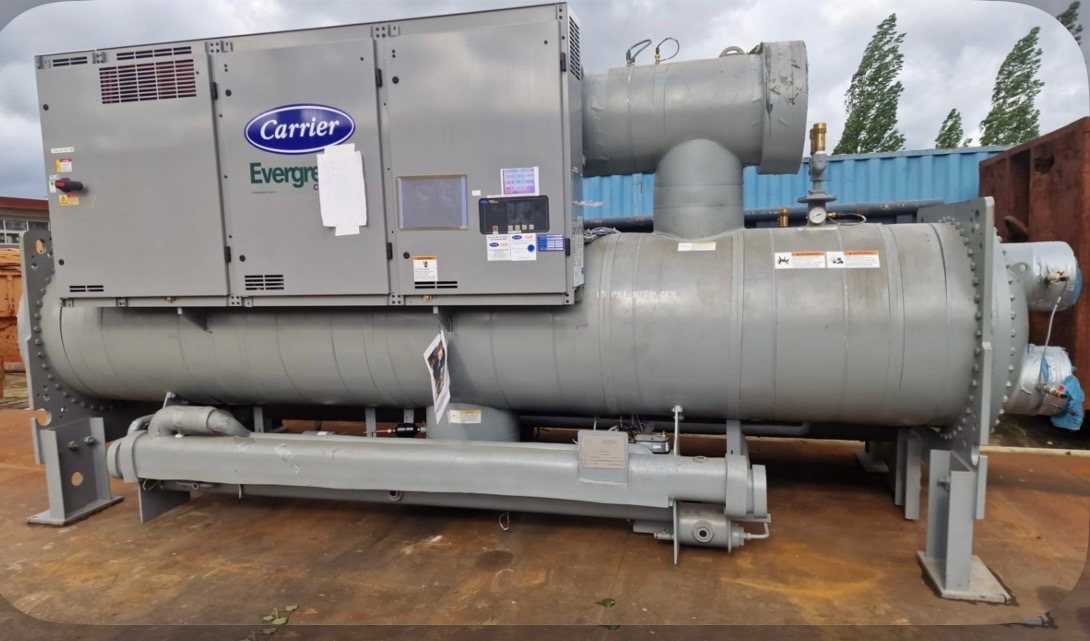
Power plant shutdowns Chiller Buyers in Houma, Louisiana
Offer and removal scope
Have a surplus chiller associated with power plant shutdowns in Houma, Louisiana to remove? We are chiller buyers, and a test run is not required to request an upfront cash offer. The buyer handles crane service, rigging, disconnects, refrigerant recovery, loading, hauling and freight. Share the machine's visible details and the site's known restrictions so the work can be coordinated with authorized personnel.
Start with the nameplate
Start with the main nameplate: a legible model, serial number, manufacturer and rated capacity can anchor the review. A wide photo showing the plate's location is useful if several machines are close together. Include a separate control or starter plate only if visible safely, and say when a number cannot be read. Do not open a cabinet or remove a guard to obtain information.
Identify the surplus equipment
Share the chiller location, nameplate details and available piping and electrical drawings. A plant drawing can help distinguish the surplus chiller from equipment that remains connected to operating systems. Mark the unit's location and identify the associated cabinets or modules included in the purchase if known.
Capacity is not shipping weight
If the equipment schedule has a tonnage, match it to the correct machine and indicate whether the number is for one unit or a combined plant. Also provide available dimensions and any documented shipping or operating weight. A cabinet that fits inside the building may still have attachments that limit its exit; capacity alone says nothing reliable about those clearances.
Identify shared power equipment
Power information belongs in the inventory even when the chiller is already idle. Share a safe photo of the rating plate and existing electrical drawings if available; identify separate controls and missing information. The buyer handles electrical disconnects through qualified personnel, coordinated with the site's authorized staff. The seller should not switch, probe or dismantle electrical components to prepare for an offer.
Determine what must stay active
Coordinate isolation of electrical and other plant utilities with authorized site personnel before disconnects. Plant personnel determine the permitted isolation boundaries and coordinate with the buyer's qualified disconnect team. Report shared electrical, fluid or process interfaces without attempting to isolate or open them yourself.
Keep the circuit closed
If the refrigerant is unknown, say so rather than guessing from the make or compressor type. A photo of the original plate, any later conversion label and existing service notes gives the recovery team a starting point. Recovery is handled by the buyer's appropriately qualified personnel; the seller should neither open the circuit nor vent or mix its contents.
Access starts at the unit
Describe the path from the machine to a loading area, not just the mailing address. Note the floor or roof, door widths, turns, overhead pipes, stairs and any changes in level that are known. Photographs of tight spots help the buyer's riggers assess the route. Share site rules for escorts, loading zones and permitted access; do not assume the chiller can leave through the nearest door.
Fit removal to the site
Identify site access rules, heavy-lift constraints and shutdown windows that may affect removal. Give the buyer the applicable gate, escort and heavy-equipment restrictions and any shutdown window approved by the plant. The professional rigging team will assess overhead clearance, ground conditions and the route to the loading area.
The actual lifting constraints
Give the buyer any available shipping weights, lifting drawings and pictures of the machine's surroundings. Explain known limits on crane setup, floor loading, overhead clearance or staging space, and note where information is unavailable. The buyer coordinates the crane and qualified riggers. An equipment plate or a general diagram is useful context, but it is not a substitute for a site-specific lift plan.
Local context, actual site
The regional context for Houma includes the coastal Bayou Region and south Louisiana waterways. It is in Terrebonne Parish. Coastal exposure may be relevant to an individual unit's visible condition; describe corrosion only where actually observed, and identify the site's road access. A regional route or facility category cannot establish the conditions at a particular property. Provide the street address, building or yard location, and any known gate, loading or access restrictions for the actual chiller. Include the facility's approved access and outage requirements alongside the inventory, especially where other cooling equipment must stay in service.
From staging to hauling
The buyer handles loading, hauling and freight as well as the rigging that gets the equipment to the truck. For planning, identify the actual loading area, gate width and any restrictions on large vehicles or staging. A regional highway may be nearby, but the last stretch into a property can still be constrained. The freight team assesses the actual route and load dimensions.
Send the information on hand
There is no need to make the machine operational before contacting a buyer. Available photographs, plate details and the location can support an upfront cash offer. Tell the buyer which parts are included and what is still uncertain, including access or refrigerant information. The removal team can work through those details with the facility before the work is arranged.