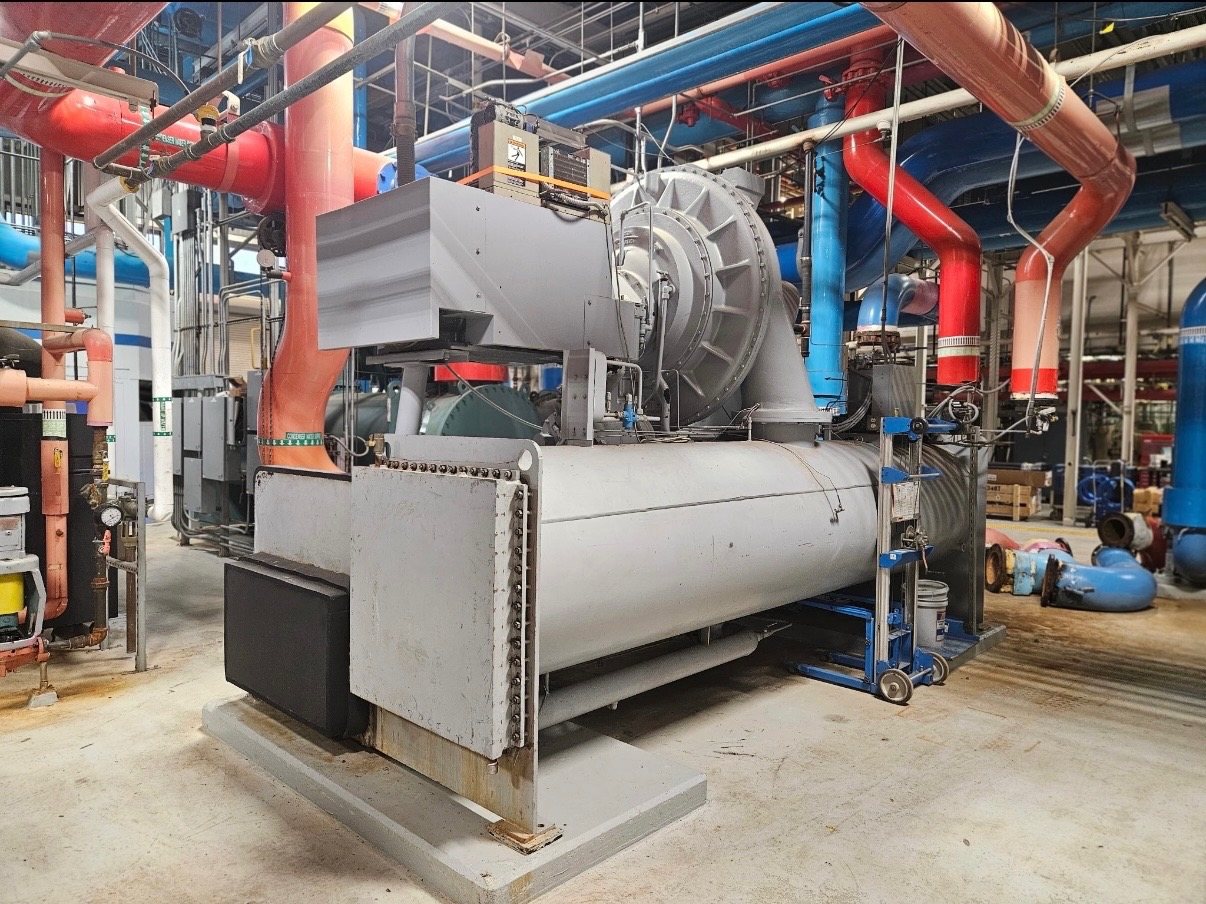
Air-cooled Chiller Buyers in Houma, Louisiana
Offer and removal scope
We purchase a used air-cooled chiller in Houma, Louisiana; we do not sell chillers. The process starts with an upfront cash offer based on the information available, with no equipment test required. The buyer handles crane service, rigging, disconnects, refrigerant recovery, loading, hauling and freight. Site staff and appropriately qualified personnel coordinate the work around actual equipment and facility constraints.
Identify the machine
Match the chiller to its records before sending an equipment list. A photo of the complete machine and a close view of the nameplate help distinguish it from neighboring assets; an equipment schedule can fill some gaps. Tell the buyer when a model, serial number or capacity comes from a drawing rather than the actual plate, and leave uncertain details marked as such.
Start with the visible configuration
Share photos of condenser coils, fans and visible guards, noting any exterior damage or corrosion. Photograph from a safe position outside the enclosure, without moving guards or reaching into fans. Describe visible damage as an observation, not a diagnosis; the buyer does not need the unit started to review the information.
Where the equipment sits
The regional context for Houma includes the coastal Bayou Region and south Louisiana waterways. It is in Terrebonne Parish. Coastal exposure may be relevant to an individual unit's visible condition; describe corrosion only where actually observed, and identify the site's road access. Give the street address and the unit's position on the property; a regional highway does not establish which gate, route or loading area can be used at that site. If this air-cooled chiller is on a roof, report any known screens or parapets along with the possible crane setup area.
Two very different measurements
If the equipment schedule has a tonnage, match it to the correct machine and indicate whether the number is for one unit or a combined plant. Also provide available dimensions and any documented shipping or operating weight. A cabinet that fits inside the building may still have attachments that limit its exit; capacity alone says nothing reliable about those clearances.
Plan the disconnects safely
Power information belongs in the inventory even when the chiller is already idle. Share a safe photo of the rating plate and existing electrical drawings if available; identify separate controls and missing information. The buyer handles electrical disconnects through qualified personnel, coordinated with the site's authorized staff. The seller should not switch, probe or dismantle electrical components to prepare for an offer.
Details that affect the review
Provide the unit dimensions and whether it is on a roof, pad or elevated structure. A roof, raised support and ground-level pad present different access questions. Include the height and extent of nearby screens or parapets if known, and say whether the stated dimensions include protruding parts.
Labels, history and safe recovery
Share the refrigerant designation and charge quantity from the plate or records if available, along with any retrofit label. The original plate does not necessarily describe a later conversion, and an unknown charge should stay unknown until qualified personnel assess it. The buyer handles refrigerant recovery with appropriately qualified personnel. Keep the circuit closed: do not attach gauges, transfer or vent refrigerant.
Agree on the work boundaries
Explain who can grant entry to the property and who understands the machine's interfaces with the rest of the facility. Their input can clarify restricted work areas, ongoing cooling loads and any permitted removal window. The buyer handles the removal services and coordinates with authorized staff. Missing schedules or drawings can be discussed without committing the site to an unapproved outage.
Plan the interfaces and access
Flag overhead wires, parapets, crane access and any restricted loading route before removal planning. The buyer's rigger assesses the reach, clearance and truck position for the specific lift. A clear photo of the surroundings and any known underground or surface restrictions is more useful than assuming that a crane can simply park beside the unit.
The route out of the building
The first obstacle may be inside the building rather than on the road. Tell the buyer where the unit sits, how it is reached and where a truck might be allowed to load. Identify narrow openings, overhead obstructions and any restricted travel paths from existing measurements. The buyer's professional team verifies the route and determines the handling plan for the specific equipment.
Information for the rigger
A clear ground-level view does not guarantee a clear lift: overhead services, structural limits and the available crane position also matter. Send the buyer what the site knows about those constraints, along with documented dimensions and weight. Professional riggers arranged by the buyer develop the equipment-specific plan. Do not tie on lifting gear or attempt to shift the chiller yourself.
Where can the truck load?
After the machine leaves its installed position, it still needs a safe staging place and a truck-accessible loading area. Share the location of gates, internal roads and any known overhead or vehicle restrictions. The buyer coordinates loading, hauling and freight. The freight team will evaluate the actual load dimensions and route rather than assuming that a nearby highway solves access inside the property.
Send the information on hand
Send a short description, safe overall and nameplate photos, and the equipment location to begin the review. Mention known damage, shared components and site restrictions; incomplete records can be marked unknown. The buyer provides an upfront cash offer without requiring an equipment test, then coordinates the proposed removal scope and work with the site's authorized representative.