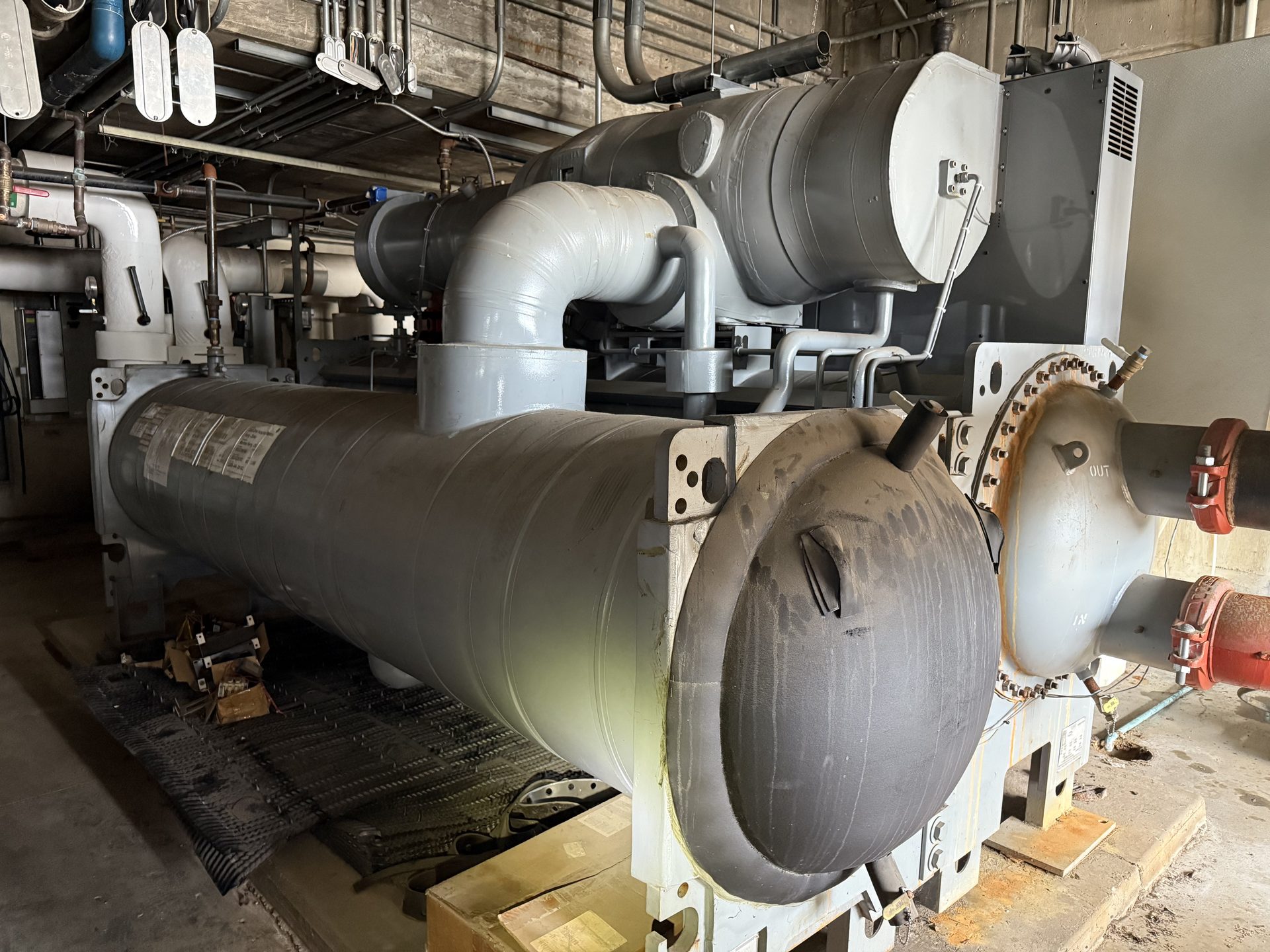
Water-Cooled Chiller Removal in New Orleans, Louisiana
A practical way to start
Have a used water-cooled chiller in New Orleans, Louisiana to remove? We are chiller buyers, and a test run is not required to request an upfront cash offer. The buyer handles crane service, rigging, disconnects, refrigerant recovery, loading, hauling and freight. Share the machine's visible details and the site's known restrictions so the work can be coordinated with authorized personnel.
Identify the machine
Start with the main nameplate: a legible model, serial number, manufacturer and rated capacity can anchor the review. A wide photo showing the plate's location is useful if several machines are close together. Include a separate control or starter plate only if visible safely, and say when a number cannot be read. Do not open a cabinet or remove a guard to obtain information.
Confirm the equipment arrangement
Identify the chilled-water and condenser-water connections from labels or drawings if available. If labels are missing, send the drawing or a safe wide view and say that the connections are unidentified. A condenser-water loop and a chilled-water loop are not interchangeable, and other equipment may depend on either one.
Where the equipment sits
The regional context for New Orleans includes the Mississippi River port setting and the I-10 corridor. It is in Orleans Parish. Dense building locations can have restricted loading areas or building rules; identify the actual entrance and any limits on a crane position. A regional route or facility category cannot establish the conditions at a particular property. Provide the street address, building or yard location, and any known gate, loading or access restrictions for the actual chiller. For this water-cooled unit, identify known shared condenser-water or chilled-water connections when describing the work area.
Two very different measurements
A capacity on a plant schedule may cover several machines, while a module plate may describe only one. Identify which figure applies to the equipment being offered. For moving it, the more relevant information is the physical envelope, documented weight and any protruding connections. If those details are missing, say so; a cooling-ton figure cannot be converted into a dependable lift weight.
Identify shared power equipment
Existing drawings and exterior photos can help identify electrical interfaces, including a remote starter or shared controls. Record plate voltage and phase only if safely visible; an unreadable value can remain unknown. The buyer arranges qualified electrical disconnects in coordination with the site, so there is no reason for the owner to expose conductors or test the system.
Record what is actually installed
Share visible shell condition, signs of external corrosion and any records on water treatment or tube maintenance. External photos and existing maintenance records are useful even if internal tube condition is not known. Do not open a shell to investigate; note visible issues and provide records with their dates if those records are available.
When the charge is uncertain
Refrigerant information affects the recovery plan, but the seller need not determine the contents by opening the circuit. Photograph safely visible labels and provide service or conversion records if they exist; tell the buyer about any known leak or missing information. The buyer arranges qualified recovery in coordination with the site. Never vent refrigerant or attempt to handle it yourself.
Agree on the work boundaries
An owner, facilities manager and building occupant may have different responsibilities. Identify who can approve access and isolation, and tell the buyer about any remaining cooling load or shared controls. The buyer coordinates qualified work and transport with the site. If an outage window has not been approved, describe it as undecided instead of committing another party to a date.
Plan the interfaces and access
Note piping isolation points and any tower-loop connections so qualified personnel can coordinate draining and disconnects. A tower or common loop may serve machines that remain in operation. The buyer handles disconnects with qualified personnel, coordinating isolation and draining with the site so remaining services and fluid handling are addressed in the plan.
Openings, turns and overhead limits
For an accurate removal discussion, include the street address, equipment location and the site's preferred truck entrance. A door measurement is useful, but the path can also be limited by a turn, low ceiling or floor transition. Describe known obstacles and share photographs where permitted. The buyer's riggers evaluate the route rather than assuming that the chiller will move intact.
The actual lifting constraints
A clear ground-level view does not guarantee a clear lift: overhead services, structural limits and the available crane position also matter. Send the buyer what the site knows about those constraints, along with documented dimensions and weight. Professional riggers arranged by the buyer develop the equipment-specific plan. Do not tie on lifting gear or attempt to shift the chiller yourself.
Where can the truck load?
A truck-ready plan begins with the site entrance and a realistic loading area. Tell the buyer about restricted gates, low overhead services, surface limits or delivery traffic that may affect access. Supply equipment dimensions and documented weight when available. The buyer arranges loading, hauling and freight; the route and vehicle arrangement depend on the actual load and property conditions.
Start with what you know
Begin with the information that is readily available: a nameplate photo, an overall view, the equipment location and a description of access. The buyer can make an upfront cash offer without a test run. Point out missing records and any equipment that must remain; questions about the removal scope can then be resolved with the site before work is arranged.