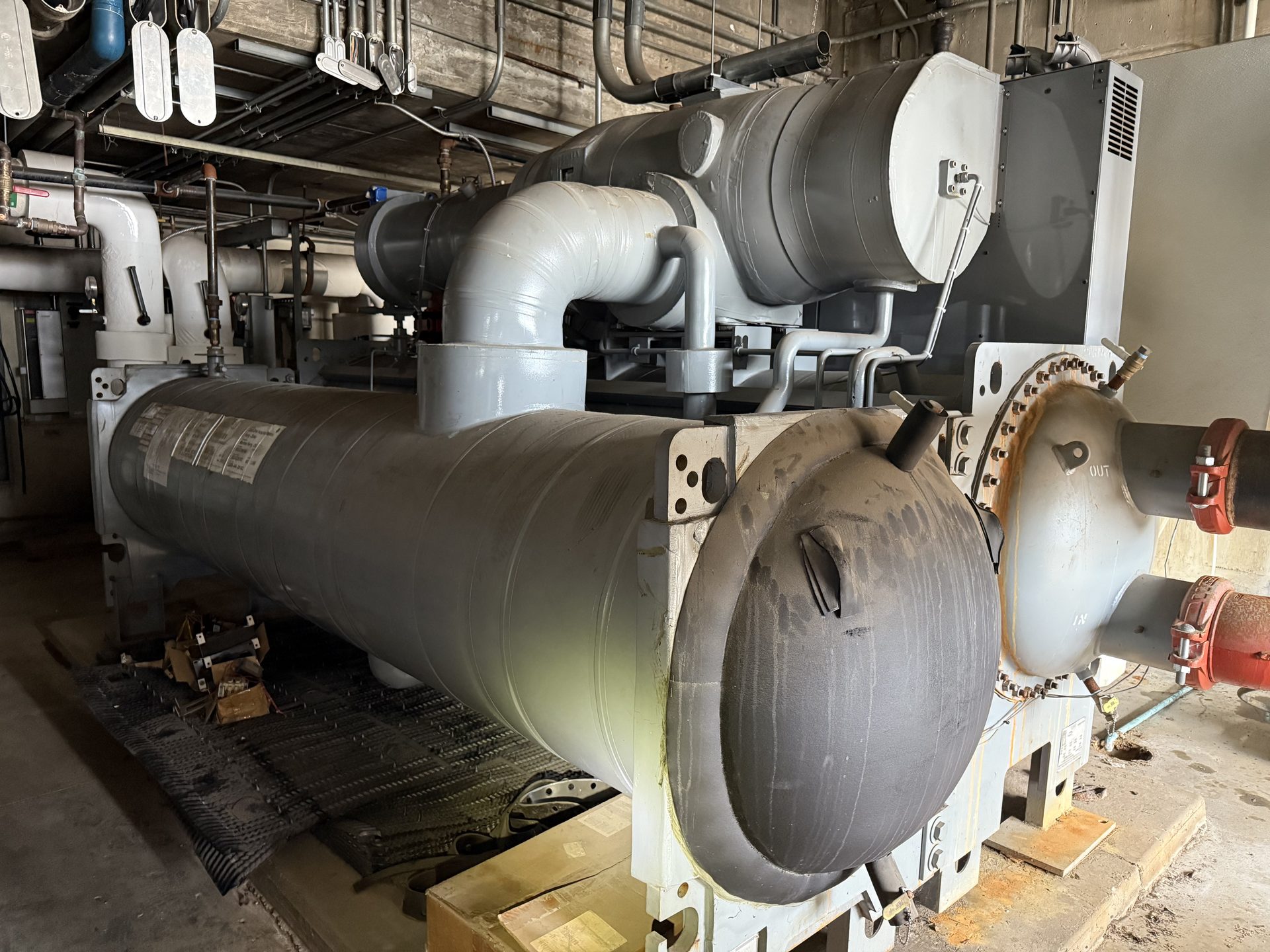
Water-cooled Chiller Buyers in Alexandria, Louisiana
Offer and removal scope
An owner with a used water-cooled chiller in Alexandria, Louisiana can begin with photographs and available records; no equipment testing is required. We buy chillers and provide an upfront cash offer. The buyer handles crane service, rigging, disconnects, refrigerant recovery, loading, hauling and freight, coordinating with authorized site personnel. An unknown detail is worth flagging; it does not need to be turned into a guess.
Agree on the work boundaries
The facility controls access and knows which systems and areas must remain in service. Share the name or role of an authorized site contact, the approved access requirements and any shutdown window already established. The buyer coordinates disconnects, refrigerant recovery, rigging and freight with that contact. Do not assume a removal date until the necessary site and equipment details have been reviewed together.
Identify the connections and machine
Identify the chilled-water and condenser-water connections from labels or drawings if available. If labels are missing, send the drawing or a safe wide view and say that the connections are unidentified. A condenser-water loop and a chilled-water loop are not interchangeable, and other equipment may depend on either one.
Identify the machine
Start with the main nameplate: a legible model, serial number, manufacturer and rated capacity can anchor the review. A wide photo showing the plate's location is useful if several machines are close together. Include a separate control or starter plate only if visible safely, and say when a number cannot be read. Do not open a cabinet or remove a guard to obtain information.
Plan the disconnects safely
A site representative can point out which control cabinets belong to the chiller and which must remain. The buyer's qualified personnel coordinate the electrical disconnect with that representative. For the initial review, an accessible nameplate photograph or existing schedule is enough to communicate the listed power information; the seller should not probe, open or operate electrical equipment.
Condition and associated components
Share visible shell condition, signs of external corrosion and any records on water treatment or tube maintenance. External photos and existing maintenance records are useful even if internal tube condition is not known. Do not open a shell to investigate; note visible issues and provide records with their dates if those records are available.
Local context, actual site
The regional context for Alexandria includes central Louisiana and the Red River and I-49 corridors. It is in Rapides Parish. If the property has multiple buildings, give the buyer the correct building and loading entrance as well as the unit's dimensions. A regional route or facility category cannot establish the conditions at a particular property. Provide the street address, building or yard location, and any known gate, loading or access restrictions for the actual chiller. For this water-cooled unit, identify known shared condenser-water or chilled-water connections when describing the work area.
Labels, history and safe recovery
Refrigerant information affects the recovery plan, but the seller need not determine the contents by opening the circuit. Photograph safely visible labels and provide service or conversion records if they exist; tell the buyer about any known leak or missing information. The buyer arranges qualified recovery in coordination with the site. Never vent refrigerant or attempt to handle it yourself.
Cooling tons and transport size
A capacity on a plant schedule may cover several machines, while a module plate may describe only one. Identify which figure applies to the equipment being offered. For moving it, the more relevant information is the physical envelope, documented weight and any protruding connections. If those details are missing, say so; a cooling-ton figure cannot be converted into a dependable lift weight.
Removal considerations for this design
Note piping isolation points and any tower-loop connections so qualified personnel can coordinate draining and disconnects. A tower or common loop may serve machines that remain in operation. The buyer handles disconnects with qualified personnel, coordinating isolation and draining with the site so remaining services and fluid handling are addressed in the plan.
Openings, turns and overhead limits
Access information can be provisional. Tell the buyer the known location of the equipment, possible loading zone and any measured opening, then identify the portions of the route that still need checking. Note nearby services or protected areas if known. The buyer's professional riggers coordinate with the facility before selecting a path; the seller need not move obstructions or disassemble the chiller.
Crane and rigging considerations
The seller can help the lift team by providing existing drawings, documented component weights and a safe view of the equipment's surroundings. Mention known overhead lines, roof edges, floor limits or restricted staging areas. The buyer handles crane service and rigging, with professionals determining the lift method and acceptable setup for the actual unit rather than relying on an estimated load.
Loading and the road out
If a unit or separate cabinet has to be staged before loading, tell the buyer what space the facility can make available and any restrictions on its use. Share measurements, documented weights and the route through the gate. The buyer arranges loading, hauling and freight; its personnel assess whether the proposed route and vehicle access are workable for the actual load.
Start with what you know
Send a short description, safe overall and nameplate photos, and the equipment location to begin the review. Mention known damage, shared components and site restrictions; incomplete records can be marked unknown. The buyer provides an upfront cash offer without requiring an equipment test, then coordinates the proposed removal scope and work with the site's authorized representative.