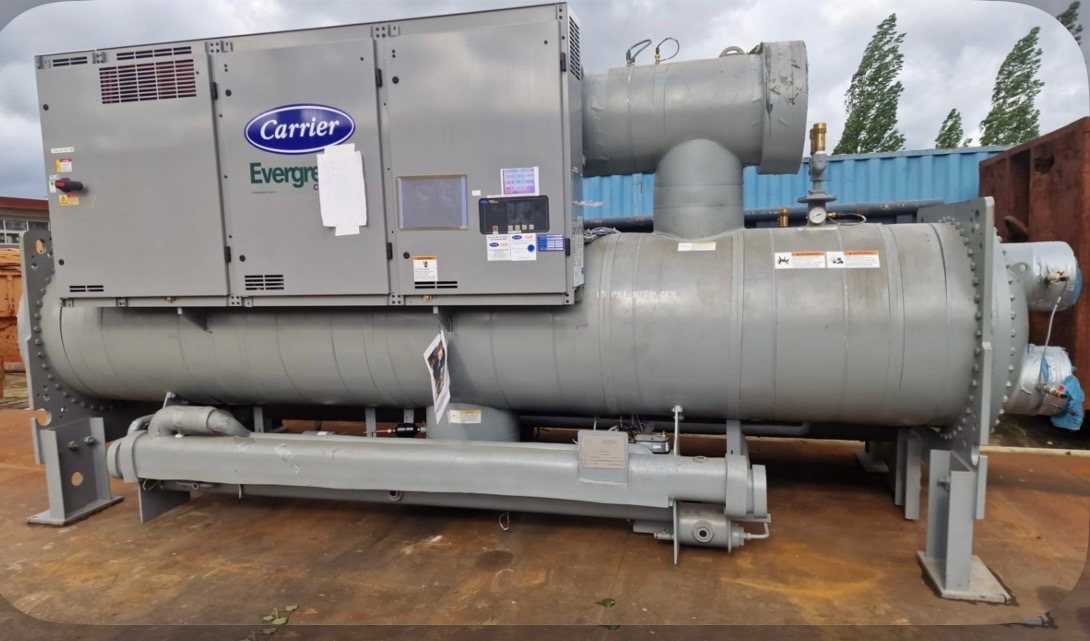
Scroll Chiller Buyers in Alexandria, Louisiana
A buyer for your chiller
An owner with a used scroll chiller in Alexandria, Louisiana can begin with photographs and available records; no equipment testing is required. We buy chillers and provide an upfront cash offer. The buyer handles crane service, rigging, disconnects, refrigerant recovery, loading, hauling and freight, coordinating with authorized site personnel. An unknown detail is worth flagging; it does not need to be turned into a guess.
The route out of the building
Access information can be provisional. Tell the buyer the known location of the equipment, possible loading zone and any measured opening, then identify the portions of the route that still need checking. Note nearby services or protected areas if known. The buyer's professional riggers coordinate with the facility before selecting a path; the seller need not move obstructions or disassemble the chiller.
Start with the visible configuration
Share the chiller nameplate and any visible compressor labels; do not remove panels to collect them. A visible compressor label and the main chiller plate serve different purposes; a compressor number alone may not identify the full machine. If either is inaccessible, share the information on hand without taking covers off.
Measure the load, not just the rating
A truck and crane are selected around the real load, not the chiller's rated cooling tons. Send available length, width, height and documented weight for the machine and for any separate included enclosure. Also share the nameplate capacity so the buyer can identify the equipment. It is fine to say that dimensions or a weight still need confirmation.
Crane and rigging considerations
Give the buyer any available shipping weights, lifting drawings and pictures of the machine's surroundings. Explain known limits on crane setup, floor loading, overhead clearance or staging space, and note where information is unavailable. The buyer coordinates the crane and qualified riggers. An equipment plate or a general diagram is useful context, but it is not a substitute for a site-specific lift plan.
Details that affect the review
Note the number of compressors or modules visible and whether the rated capacity describes one module or the full system. A bank can contain several modules, each with its own rating. Tell the buyer whether the figure on a schedule is for a single module or the complete system and which modules, if any, are remaining in service.
Loading and the road out
Moving a chiller off its foundation and getting it onto a truck are separate planning steps. Show the proposed staging and loading area, identify any site traffic restrictions and share the measurements you have. The buyer coordinates loading, hauling and freight with the riggers. If the route or truck position is unknown, say so rather than assuming a particular vehicle will fit.
Match the plate to the unit
When a plate is difficult to read, send the clearest safe photo available along with any relevant equipment schedule. Identify the particular machine in a room containing multiple units and note which numbers are incomplete. A buyer can use those starting points to ask focused follow-up questions without relying on a guess about model or age.
Removal considerations for this design
Photograph accessible coils, headers and mounting points and describe the route to the loading area. Headers may connect a module to other equipment, and mounting points must be assessed for the actual unit. The seller can show the layout safely; qualified personnel decide whether and how the equipment can be separated and moved.
Map the components
When there are several similar machines, identify the one that is surplus and photograph it in context. List any separate starter, drive, control or module that belongs to the proposed purchase, but do not assume a nearby component is part of it. A drawing or equipment schedule can show the arrangement; incomplete records are still useful when their gaps are identified.
Plan the disconnects safely
Existing drawings and exterior photos can help identify electrical interfaces, including a remote starter or shared controls. Record plate voltage and phase only if safely visible; an unreadable value can remain unknown. The buyer arranges qualified electrical disconnects in coordination with the site, so there is no reason for the owner to expose conductors or test the system.
Fluid connections and isolation
Do not assume a nearby pipe can be drained just because the chiller is surplus. Other equipment may use the same loop, and a process line can require site-specific precautions. Share existing labels and drawings, or note that the contents are unknown. The buyer handles the disconnect work with qualified personnel and the facility's authorized team.
Where the equipment sits
The regional context for Alexandria includes central Louisiana and the Red River and I-49 corridors. It is in Rapides Parish. If the property has multiple buildings, give the buyer the correct building and loading entrance as well as the unit's dimensions. Give the street address and the unit's position on the property; a regional highway does not establish which gate, route or loading area can be used at that site. If the scroll chiller is modular, identify the units being offered and where their shared headers are located, if known.
When the charge is uncertain
Tell the buyer whether a refrigerant designation comes from a nameplate, a later conversion label or a service record. If the source is missing or the charge is unknown, say that plainly. The buyer handles recovery with qualified personnel. There is no reason for the seller to fit gauges, open a valve, mix refrigerants or release any contents.
Access and operating constraints
Before removal, define what stays in service and who can authorize work at the property. Existing site rules may cover escorts, work windows, protected areas or shared utilities. The buyer arranges the removal team and coordinates with authorized personnel; the site supplies its requirements. Any window discussed is a planning input, not a promise that a particular date will be available.