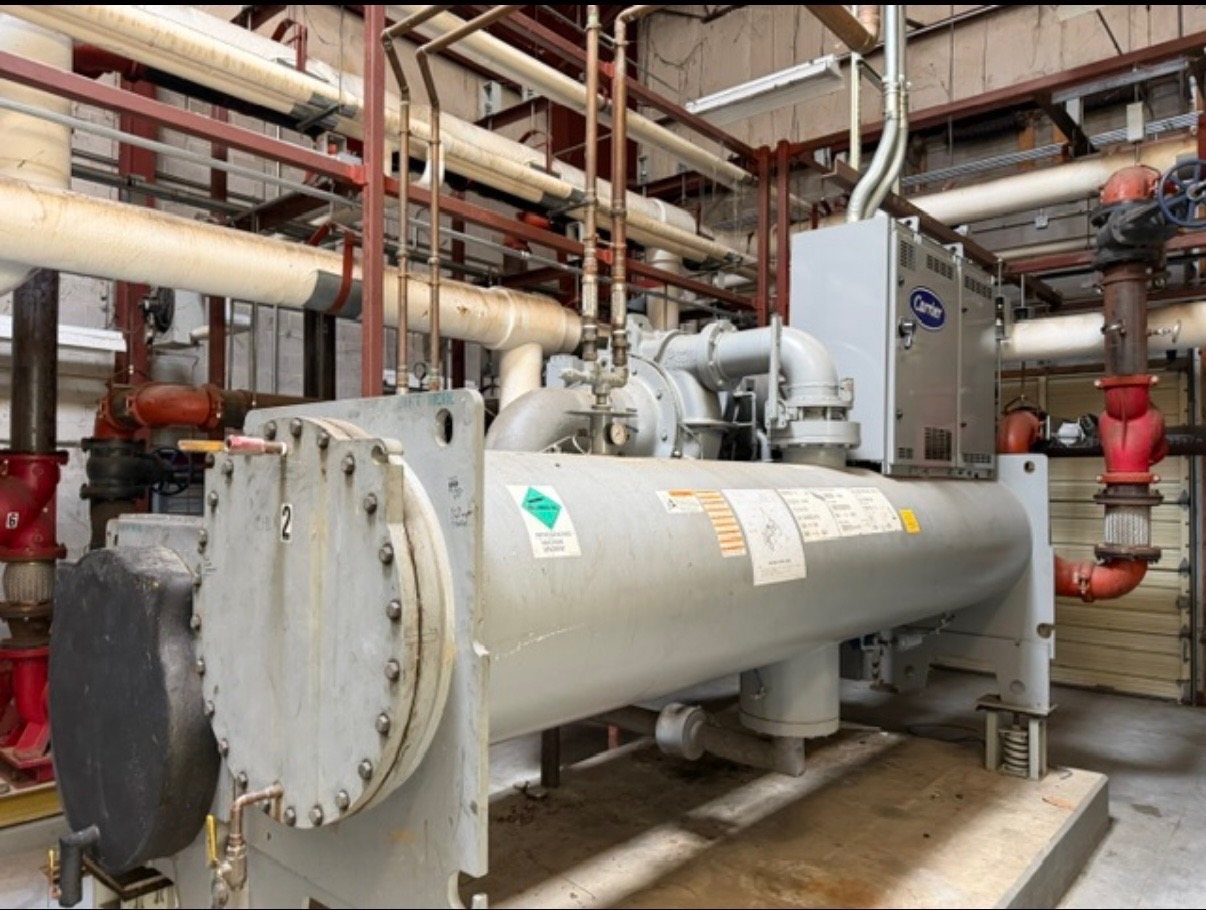
Aaon Chiller Buyers in Kenner, Louisiana
From surplus unit to removal
We purchase a used Aaon chiller in Kenner, Louisiana; we do not sell chillers. The process starts with an upfront cash offer based on the information available, with no equipment test required. The buyer handles crane service, rigging, disconnects, refrigerant recovery, loading, hauling and freight. Site staff and appropriately qualified personnel coordinate the work around actual equipment and facility constraints.
From the chiller to the loading area
Describe the path from the machine to a loading area, not just the mailing address. Note the floor or roof, door widths, turns, overhead pipes, stairs and any changes in level that are known. Photographs of tight spots help the buyer's riggers assess the route. Share site rules for escorts, loading zones and permitted access; do not assume the chiller can leave through the nearest door.
Match the plate to the equipment
Share the Aaon equipment nameplate and identify the item as a chiller or chiller module rather than assuming from the brand alone. Equipment bearing a familiar name is not necessarily a chiller. A photo of the entire assembly and any visible water connections helps distinguish the item being offered; if its function is unclear, describe the uncertainty rather than guessing.
Capacity is not shipping weight
The buyer needs two different kinds of size information. Rated cooling tons describe performance, whereas transport planning depends on the actual length, width, height and documented weight of each piece. Explain whether a figure covers the whole chiller or a single module and whether a starter or other enclosure is separate. Do not estimate a load weight from cooling capacity.
Crane and rigging considerations
A lift plan depends on more than the cooling rating. Provide the known equipment dimensions, documented weights, roof or room access and any instructions that came with the unit. Tell the buyer about known overhead or ground restrictions and whether staging space is limited. The buyer arranges crane service and professional rigging; qualified personnel determine the lifting and separation method.
Record the actual arrangement
Photograph visible compressor sections, condenser coils and water connections to help establish the unit configuration. These views help establish what is actually present without assuming a particular compressor or condenser arrangement. Mention any separate module or control cabinet, and specify which pieces the owner intends to include.
Where can the truck load?
A truck-ready plan begins with the site entrance and a realistic loading area. Tell the buyer about restricted gates, low overhead services, surface limits or delivery traffic that may affect access. Supply equipment dimensions and documented weight when available. The buyer arranges loading, hauling and freight; the route and vehicle arrangement depend on the actual load and property conditions.
Separate the unit from its surroundings
An equipment name may describe heat rejection, a compressor, or a modular system rather than the complete installation. Share exterior pictures of the whole machine, visible connections and any separate controls. Indicate which components are included and which must remain. If you are unsure whether the unit is air-cooled, water-cooled or configured another way, leave that question open for review.
Document the route and lift
Note whether the unit is roof-mounted or at grade, and share access dimensions and any available lifting instructions. The location matters independently of cooling capacity: an elevated unit may need a different lift approach from a machine on a pad. Share the route to the loading area and any overhead restrictions for the buyer's assessment.
Electrical information for the team
A site representative can point out which control cabinets belong to the chiller and which must remain. The buyer's qualified personnel coordinate the electrical disconnect with that representative. For the initial review, an accessible nameplate photograph or existing schedule is enough to communicate the listed power information; the seller should not probe, open or operate electrical equipment.
Labels, history and safe recovery
A retired chiller can still contain refrigerant, so its status should not be inferred from its operating history. Provide the safely visible designation and any known service or recovery notes, including gaps. The buyer coordinates the recovery work through appropriately qualified personnel; the seller leaves the circuit closed and does not vent or transfer refrigerant.
Local context, actual site
The regional context for Kenner includes western greater New Orleans and the airport-side I-10 corridor. It is in Jefferson Parish. For an airport-area property, ask the site about delivery entrances, security and operating-hour restrictions rather than assuming truck access. Give the street address and the unit's position on the property; a regional highway does not establish which gate, route or loading area can be used at that site. If a separate starter or control is included, show where it sits relative to the chiller and the path to the loading area.
Coordinate with the facility
The facility controls access and knows which systems and areas must remain in service. Share the name or role of an authorized site contact, the approved access requirements and any shutdown window already established. The buyer coordinates disconnects, refrigerant recovery, rigging and freight with that contact. Do not assume a removal date until the necessary site and equipment details have been reviewed together.
Start with what you know
A useful first message does not need every field completed. Identify the chiller and its location, send safe photographs and disclose known damage, missing records or access restrictions. The buyer provides an upfront cash offer without requiring equipment testing and handles the removal work in coordination with the site. Further details can be clarified as the actual scope is reviewed.