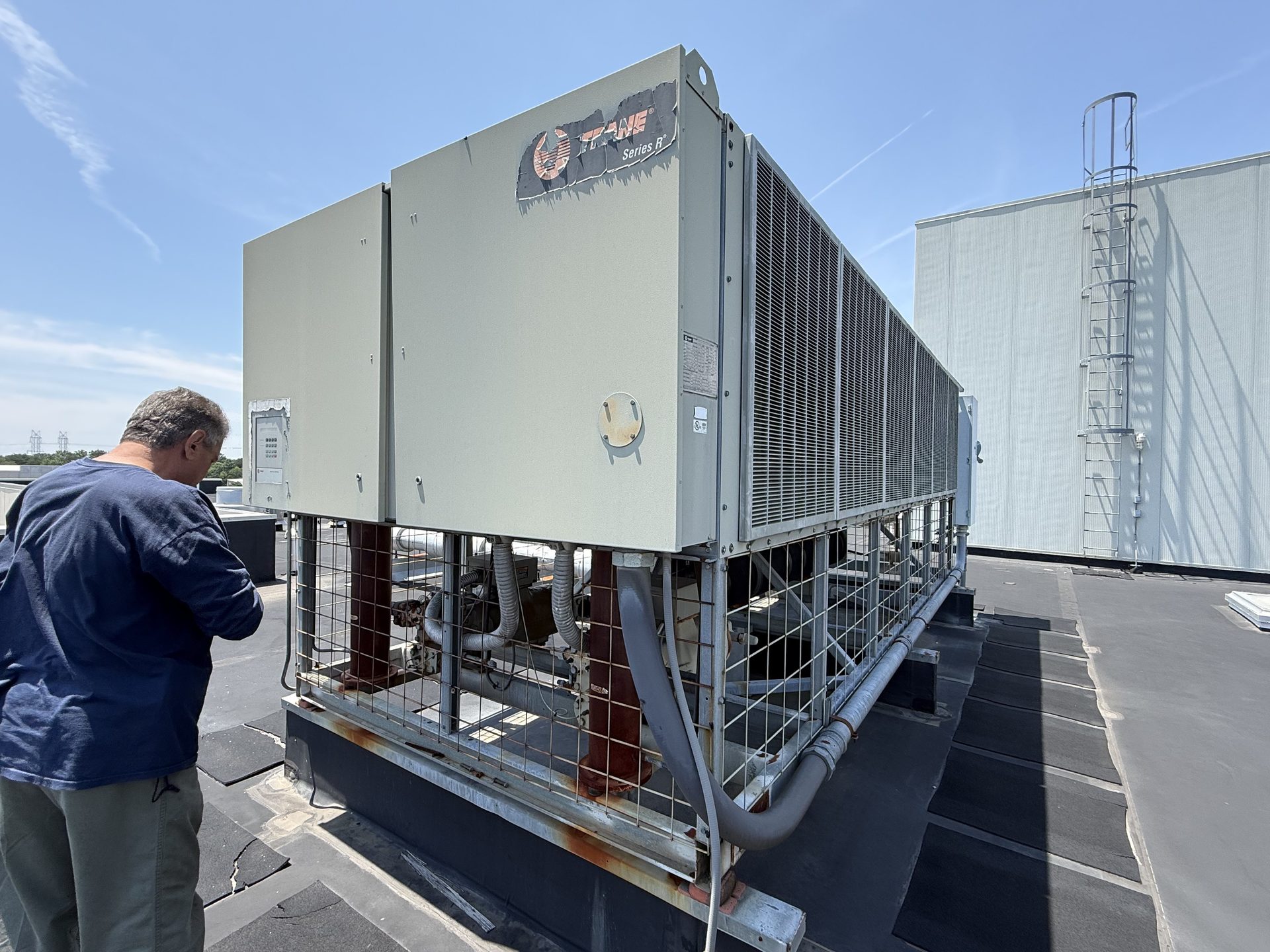
Air-cooled Chiller Buyers in Kenner, Louisiana
Offer and removal scope
We purchase a used air-cooled chiller in Kenner, Louisiana; we do not sell chillers. The process starts with an upfront cash offer based on the information available, with no equipment test required. The buyer handles crane service, rigging, disconnects, refrigerant recovery, loading, hauling and freight. Site staff and appropriately qualified personnel coordinate the work around actual equipment and facility constraints.
Start with the nameplate
A nameplate serves as an anchor for the discussion, not a reason to take equipment apart. From an accessible position, photograph the main plate and the machine around it; include model, serial and capacity only where legible. If the site has several similar chillers, label the photograph with the building and unit number so records are not accidentally matched to the wrong asset.
Start with the visible configuration
Share photos of condenser coils, fans and visible guards, noting any exterior damage or corrosion. Photograph from a safe position outside the enclosure, without moving guards or reaching into fans. Describe visible damage as an observation, not a diagnosis; the buyer does not need the unit started to review the information.
Cooling tons and transport size
If the equipment schedule has a tonnage, match it to the correct machine and indicate whether the number is for one unit or a combined plant. Also provide available dimensions and any documented shipping or operating weight. A cabinet that fits inside the building may still have attachments that limit its exit; capacity alone says nothing reliable about those clearances.
One machine or several?
One photo can show several assets without showing which one is surplus. Mark the intended chiller on a wide image, then pair its plate with the same asset in the equipment list. Say whether associated controls or modules are part of the sale. If the owner has not decided what is included, flag that question for the buyer and site representative to resolve.
Details that affect the review
Provide the unit dimensions and whether it is on a roof, pad or elevated structure. A roof, raised support and ground-level pad present different access questions. Include the height and extent of nearby screens or parapets if known, and say whether the stated dimensions include protruding parts.
Keep the circuit closed
Refrigerant information affects the recovery plan, but the seller need not determine the contents by opening the circuit. Photograph safely visible labels and provide service or conversion records if they exist; tell the buyer about any known leak or missing information. The buyer arranges qualified recovery in coordination with the site. Never vent refrigerant or attempt to handle it yourself.
Electrical information for the team
An electrical schedule may identify voltage, phase, frequency and a remote starter even when the main machine is disconnected. Share the documents and safe exterior photos, noting whether controls are included or serve other units. The buyer coordinates qualified electrical disconnect personnel with the site. Do not open energized or closed cabinets, test circuits or disturb wiring to prepare a description.
Removal considerations for this design
Flag overhead wires, parapets, crane access and any restricted loading route before removal planning. The buyer's rigger assesses the reach, clearance and truck position for the specific lift. A clear photo of the surroundings and any known underground or surface restrictions is more useful than assuming that a crane can simply park beside the unit.
Agree on the work boundaries
The facility controls access and knows which systems and areas must remain in service. Share the name or role of an authorized site contact, the approved access requirements and any shutdown window already established. The buyer coordinates disconnects, refrigerant recovery, rigging and freight with that contact. Do not assume a removal date until the necessary site and equipment details have been reviewed together.
Plan the lift around the site
A clear ground-level view does not guarantee a clear lift: overhead services, structural limits and the available crane position also matter. Send the buyer what the site knows about those constraints, along with documented dimensions and weight. Professional riggers arranged by the buyer develop the equipment-specific plan. Do not tie on lifting gear or attempt to shift the chiller yourself.
Local context, actual site
The regional context for Kenner includes western greater New Orleans and the airport-side I-10 corridor. It is in Jefferson Parish. For an airport-area property, ask the site about delivery entrances, security and operating-hour restrictions rather than assuming truck access. Give the street address and the unit's position on the property; a regional highway does not establish which gate, route or loading area can be used at that site. If this air-cooled chiller is on a roof, report any known screens or parapets along with the possible crane setup area.
The route out of the building
For an accurate removal discussion, include the street address, equipment location and the site's preferred truck entrance. A door measurement is useful, but the path can also be limited by a turn, low ceiling or floor transition. Describe known obstacles and share photographs where permitted. The buyer's riggers evaluate the route rather than assuming that the chiller will move intact.
Freight begins at the gate
The buyer handles loading, hauling and freight as well as the rigging that gets the equipment to the truck. For planning, identify the actual loading area, gate width and any restrictions on large vehicles or staging. A regional highway may be nearby, but the last stretch into a property can still be constrained. The freight team assesses the actual route and load dimensions.