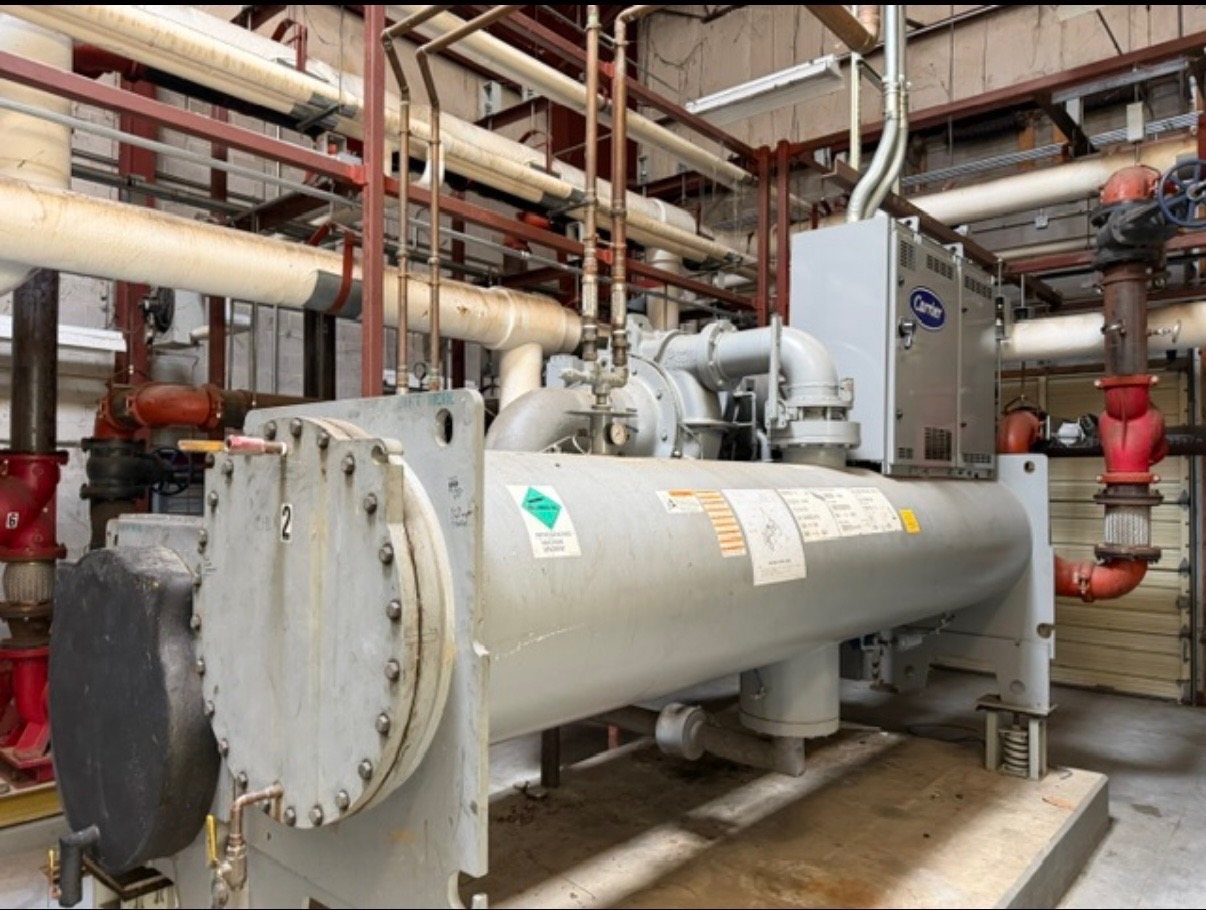
Hospitals Chiller Buyers in Shreveport, Louisiana
From surplus unit to removal
An owner with a surplus chiller associated with hospitals in Shreveport, Louisiana can begin with photographs and available records; no equipment testing is required. We buy chillers and provide an upfront cash offer. The buyer handles crane service, rigging, disconnects, refrigerant recovery, loading, hauling and freight, coordinating with authorized site personnel. An unknown detail is worth flagging; it does not need to be turned into a guess.
Define the purchase scope
A list of assets is especially useful when one room contains multiple similar chillers. Pair each plate photo with a location and say which machine, modules and separate cabinets are included. Identify anything shared or excluded. A plant-wide schedule can accompany the list, but a combined cooling total should not be presented as the rating of each individual unit.
Start with the site's equipment list
Identify the chiller and any shared chilled-water connections using available equipment schedules or photos. A central plant may have several machines on a shared loop. Identify the exact chiller being offered, the equipment that must stay, and any associated controls using the facility schedule or accessible nameplate photographs.
Start with the nameplate
When a plate is difficult to read, send the clearest safe photo available along with any relevant equipment schedule. Identify the particular machine in a room containing multiple units and note which numbers are incomplete. A buyer can use those starting points to ask focused follow-up questions without relying on a guess about model or age.
Plan the disconnects safely
Existing drawings and exterior photos can help identify electrical interfaces, including a remote starter or shared controls. Record plate voltage and phase only if safely visible; an unreadable value can remain unknown. The buyer arranges qualified electrical disconnects in coordination with the site, so there is no reason for the owner to expose conductors or test the system.
Determine what must stay active
Coordinate with facilities staff so removal does not interrupt active cooling, patient services or other essential systems. The facility decides how patient services and active cooling remain protected. The buyer coordinates with authorized staff on the approved isolation and disconnect plan; no test run is necessary just to seek an offer for the retired unit.
When the charge is uncertain
If the refrigerant is unknown, say so rather than guessing from the make or compressor type. A photo of the original plate, any later conversion label and existing service notes gives the recovery team a starting point. Recovery is handled by the buyer's appropriately qualified personnel; the seller should neither open the circuit nor vent or mix its contents.
Two very different measurements
A capacity on a plant schedule may cover several machines, while a module plate may describe only one. Identify which figure applies to the equipment being offered. For moving it, the more relevant information is the physical envelope, documented weight and any protruding connections. If those details are missing, say so; a cooling-ton figure cannot be converted into a dependable lift weight.
Access and the approved work window
Discuss access, infection-control or noise restrictions, and the approved lifting and loading window. Loading or lifting may have to coexist with patient routes, deliveries and occupied areas. Provide the site's actual noise, access and infection-control requirements when known, without assuming all hospitals apply the same restrictions.
Access starts at the unit
The first obstacle may be inside the building rather than on the road. Tell the buyer where the unit sits, how it is reached and where a truck might be allowed to load. Identify narrow openings, overhead obstructions and any restricted travel paths from existing measurements. The buyer's professional team verifies the route and determines the handling plan for the specific equipment.
Information for the rigger
A clear ground-level view does not guarantee a clear lift: overhead services, structural limits and the available crane position also matter. Send the buyer what the site knows about those constraints, along with documented dimensions and weight. Professional riggers arranged by the buyer develop the equipment-specific plan. Do not tie on lifting gear or attempt to shift the chiller yourself.
Where the equipment sits
The regional context for Shreveport includes the Shreveport–Bossier area and the I-20 and I-49 corridors. It extends into Caddo Parish and Bossier Parish; confirm the parish for the property. Because the city spans more than one parish, confirm the street address and actual parish, particularly near a boundary. A regional route or facility category cannot establish the conditions at a particular property. Provide the street address, building or yard location, and any known gate, loading or access restrictions for the actual chiller. Include the facility's approved access and outage requirements alongside the inventory, especially where other cooling equipment must stay in service.
Freight begins at the gate
A good freight discussion includes the equipment's documented weight, outside dimensions, gate location and space available to load. Identify narrow internal roads, overhead obstructions or restrictions on large vehicles if known. The buyer handles loading and hauling as part of the freight arrangement, while its team checks the actual route with the site. Cooling tons alone cannot establish transport requirements.
A practical first message
There is no need to make the machine operational before contacting a buyer. Available photographs, plate details and the location can support an upfront cash offer. Tell the buyer which parts are included and what is still uncertain, including access or refrigerant information. The removal team can work through those details with the facility before the work is arranged.