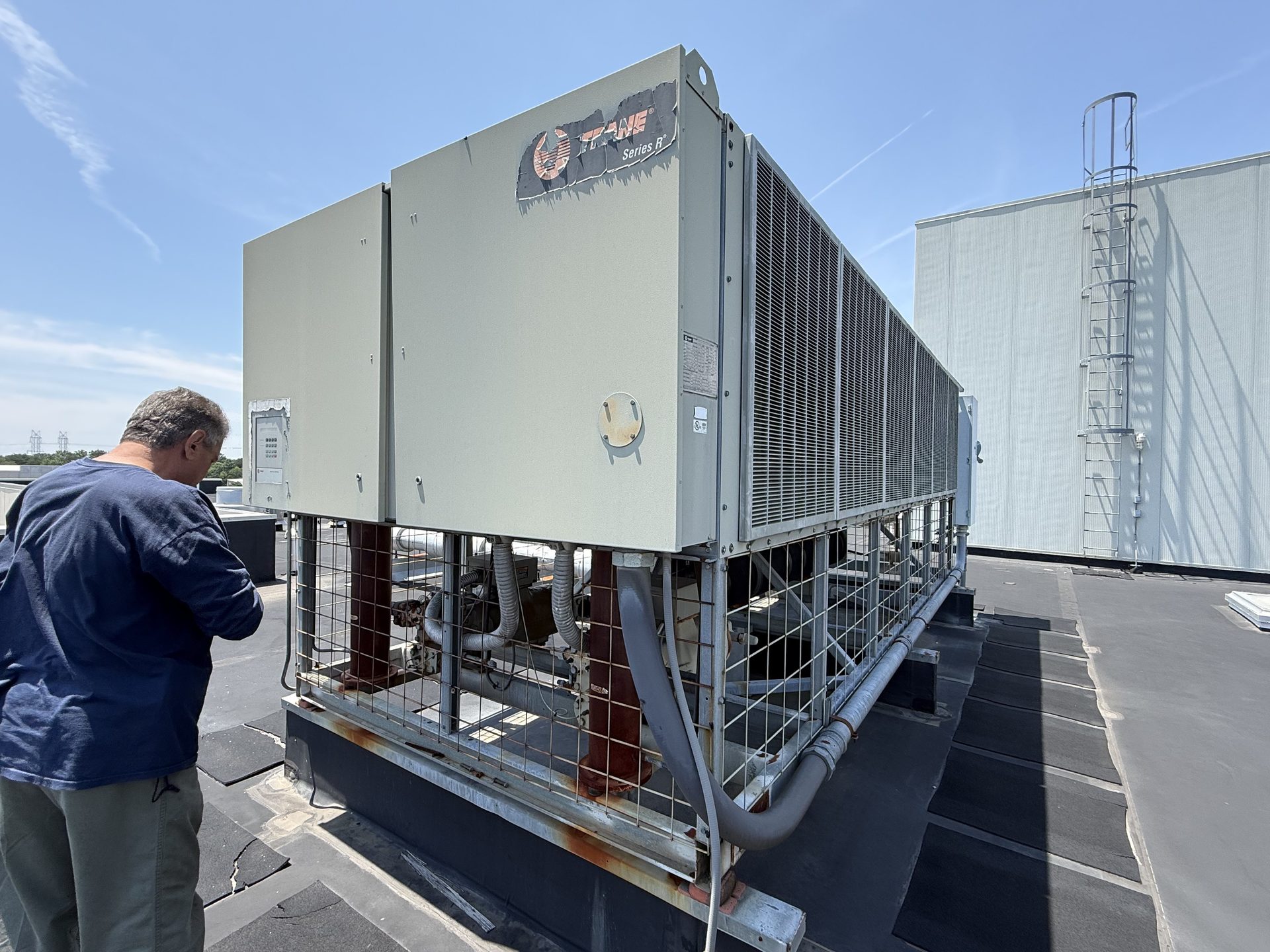
Power plant shutdowns Chiller Buyers in Shreveport, Louisiana
Offer and removal scope
An owner with a surplus chiller associated with power plant shutdowns in Shreveport, Louisiana can begin with photographs and available records; no equipment testing is required. We buy chillers and provide an upfront cash offer. The buyer handles crane service, rigging, disconnects, refrigerant recovery, loading, hauling and freight, coordinating with authorized site personnel. An unknown detail is worth flagging; it does not need to be turned into a guess.
The details worth sending
A nameplate serves as an anchor for the discussion, not a reason to take equipment apart. From an accessible position, photograph the main plate and the machine around it; include model, serial and capacity only where legible. If the site has several similar chillers, label the photograph with the building and unit number so records are not accidentally matched to the wrong asset.
Identify the surplus equipment
Share the chiller location, nameplate details and available piping and electrical drawings. A plant drawing can help distinguish the surplus chiller from equipment that remains connected to operating systems. Mark the unit's location and identify the associated cabinets or modules included in the purchase if known.
Two very different measurements
A capacity on a plant schedule may cover several machines, while a module plate may describe only one. Identify which figure applies to the equipment being offered. For moving it, the more relevant information is the physical envelope, documented weight and any protruding connections. If those details are missing, say so; a cooling-ton figure cannot be converted into a dependable lift weight.
Keep the circuit closed
Tell the buyer whether a refrigerant designation comes from a nameplate, a later conversion label or a service record. If the source is missing or the charge is unknown, say that plainly. The buyer handles recovery with qualified personnel. There is no reason for the seller to fit gauges, open a valve, mix refrigerants or release any contents.
Coordinate the isolation boundaries
Coordinate isolation of electrical and other plant utilities with authorized site personnel before disconnects. Plant personnel determine the permitted isolation boundaries and coordinate with the buyer's qualified disconnect team. Report shared electrical, fluid or process interfaces without attempting to isolate or open them yourself.
Plan from the real address
The regional context for Shreveport includes the Shreveport–Bossier area and the I-20 and I-49 corridors. It extends into Caddo Parish and Bossier Parish; confirm the parish for the property. Because the city spans more than one parish, confirm the street address and actual parish, particularly near a boundary. Give the street address and the unit's position on the property; a regional highway does not establish which gate, route or loading area can be used at that site. Include the facility's approved access and outage requirements alongside the inventory, especially where other cooling equipment must stay in service.
Identify shared power equipment
Power information belongs in the inventory even when the chiller is already idle. Share a safe photo of the rating plate and existing electrical drawings if available; identify separate controls and missing information. The buyer handles electrical disconnects through qualified personnel, coordinated with the site's authorized staff. The seller should not switch, probe or dismantle electrical components to prepare for an offer.
The actual lifting constraints
If a unit is above grade or inside a constrained room, describe the possible route and any known structural or overhead limits. A safe photo of the surrounding area can help, along with unit-specific rigging documents. The buyer's rigging team assesses lift points, crane position and whether components can move as assembled. The seller is not expected to perform rigging or dismantling.
Access and the approved work window
Identify site access rules, heavy-lift constraints and shutdown windows that may affect removal. Give the buyer the applicable gate, escort and heavy-equipment restrictions and any shutdown window approved by the plant. The professional rigging team will assess overhead clearance, ground conditions and the route to the loading area.
Access starts at the unit
The first obstacle may be inside the building rather than on the road. Tell the buyer where the unit sits, how it is reached and where a truck might be allowed to load. Identify narrow openings, overhead obstructions and any restricted travel paths from existing measurements. The buyer's professional team verifies the route and determines the handling plan for the specific equipment.
Loading and the road out
A good freight discussion includes the equipment's documented weight, outside dimensions, gate location and space available to load. Identify narrow internal roads, overhead obstructions or restrictions on large vehicles if known. The buyer handles loading and hauling as part of the freight arrangement, while its team checks the actual route with the site. Cooling tons alone cannot establish transport requirements.
A practical first message
A useful first message does not need every field completed. Identify the chiller and its location, send safe photographs and disclose known damage, missing records or access restrictions. The buyer provides an upfront cash offer without requiring equipment testing and handles the removal work in coordination with the site. Further details can be clarified as the actual scope is reviewed.