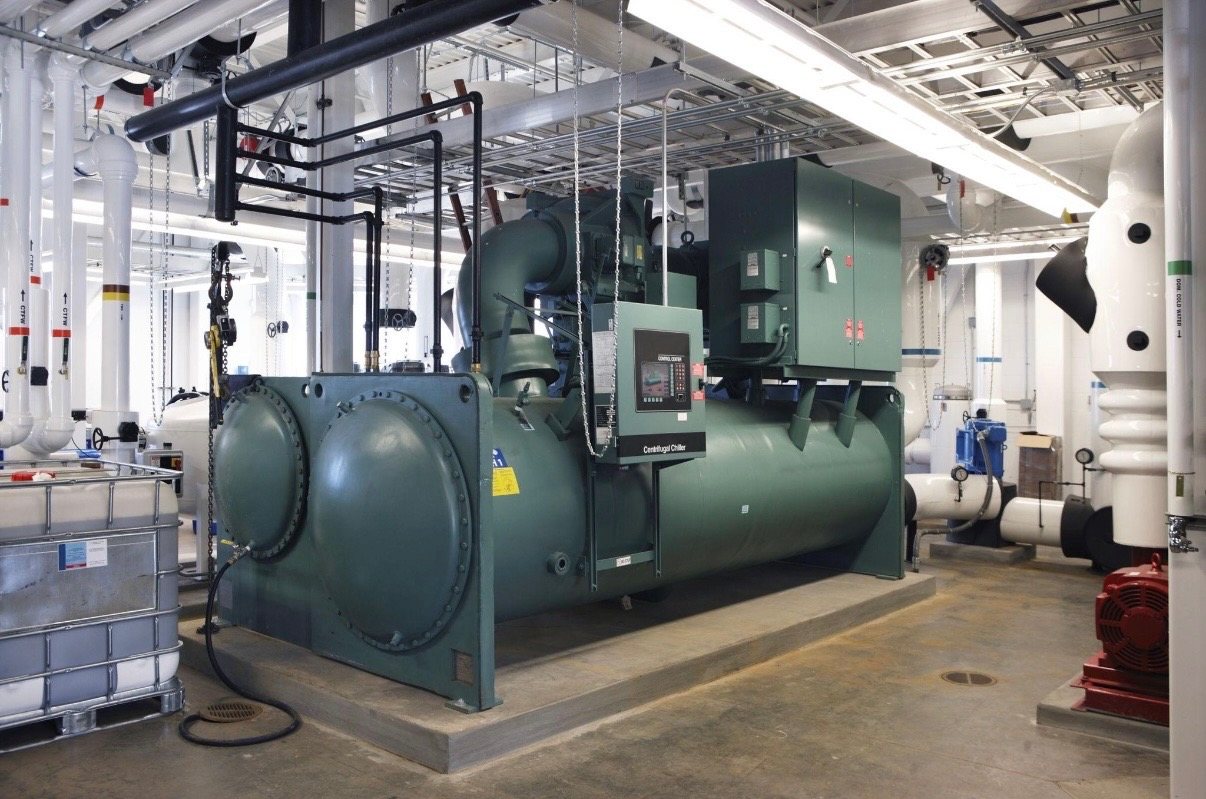
R-22 Chiller Buyers in Shreveport, Louisiana
Offer and removal scope
Have a used chiller identified with R-22 refrigerant in Shreveport, Louisiana to remove? We are chiller buyers, and a test run is not required to request an upfront cash offer. The buyer handles crane service, rigging, disconnects, refrigerant recovery, loading, hauling and freight. Share the machine's visible details and the site's known restrictions so the work can be coordinated with authorized personnel.
The route out of the building
Identify where the chiller sits relative to the building entrance and loading area, then mention any known obstacles along that path. A narrow door, low pipe, tight turn or roof parapet may matter more than distance to the road. Provide existing measurements or photographs when permitted. The buyer's riggers verify the actual route and do not rely on an assumed clear opening.
Read the label and later records
Photograph the refrigerant nameplate and any retrofit label; do not assume the original charge is still present. The original plate and a later conversion label may not agree. Send both with any dated records so the recovery team can determine what information applies to the machine as it stands; a brand or age alone is not proof of the current charge.
Capacity is not shipping weight
If a modular bank is involved, a building's total capacity can obscure the size of each piece. State how many modules are offered and which nameplate rating applies to each, if visible. The freight team also needs the actual outside dimensions and documented weight: a cooling ton is a capacity measure, not the weight of a shipping load.
Crane and rigging considerations
The seller can help the lift team by providing existing drawings, documented component weights and a safe view of the equipment's surroundings. Mention known overhead lines, roof edges, floor limits or restricted staging areas. The buyer handles crane service and rigging, with professionals determining the lift method and acceptable setup for the actual unit rather than relying on an estimated load.
Provide the available records
Share available refrigerant service and recovery records with the removal team. Previous maintenance notes can identify reported changes or recovery, but gaps are common and should be marked as unknown. Do not connect gauges or attempt to establish the charge by operating the machine just to request an offer.
From staging to hauling
A truck-ready plan begins with the site entrance and a realistic loading area. Tell the buyer about restricted gates, low overhead services, surface limits or delivery traffic that may affect access. Supply equipment dimensions and documented weight when available. The buyer arranges loading, hauling and freight; the route and vehicle arrangement depend on the actual load and property conditions.
Start with the nameplate
Before compiling an equipment list, check whether the record identifies an individual chiller or the whole plant. Send the buyer the safest available photograph of the actual unit and its label, together with any matching schedule. A plate that is obscured or missing can be described honestly; do not remove a cover or enter a restricted area to obtain it.
Leave handling to qualified personnel
Leave the circuit closed and coordinate recovery through appropriately qualified personnel; never vent refrigerant. The buyer arranges refrigerant recovery using appropriately qualified personnel in coordination with the site. The seller should leave valves and circuit connections untouched; the removal plan must account for the actual equipment and records. Keep the circuit closed and never release refrigerant.
Power and separate controls
Provide the voltage, phase and frequency listed on an accessible nameplate or equipment schedule, if legible. Note any separate starter, drive or control enclosure and whether it is included or shared. Do not open a panel or handle wiring to collect these details. The buyer coordinates qualified disconnect personnel with authorized site staff, who identify isolation boundaries and any equipment that must remain energized.
What remains connected?
Identify visible water or process connections from existing labels or drawings, and flag any lines shared with equipment that remains. The site should explain known fluid or contamination concerns and who controls the isolation boundaries. The buyer coordinates qualified disconnects and appropriate fluid handling with authorized personnel. Do not drain or open an unfamiliar line just to prepare the machine for review.
Location and site access
The regional context for Shreveport includes the Shreveport–Bossier area and the I-20 and I-49 corridors. It extends into Caddo Parish and Bossier Parish; confirm the parish for the property. Because the city spans more than one parish, confirm the street address and actual parish, particularly near a boundary. Give the street address and the unit's position on the property; a regional highway does not establish which gate, route or loading area can be used at that site. Include any restrictions on access to the chiller's machinery area so the qualified recovery team can plan around the site.
Coordinate with the facility
An owner, facilities manager and building occupant may have different responsibilities. Identify who can approve access and isolation, and tell the buyer about any remaining cooling load or shared controls. The buyer coordinates qualified work and transport with the site. If an outage window has not been approved, describe it as undecided instead of committing another party to a date.
Start with what you know
Begin with the information that is readily available: a nameplate photo, an overall view, the equipment location and a description of access. The buyer can make an upfront cash offer without a test run. Point out missing records and any equipment that must remain; questions about the removal scope can then be resolved with the site before work is arranged.