Who Buys Used Chillers in Louisiana?
A buyer for your chiller
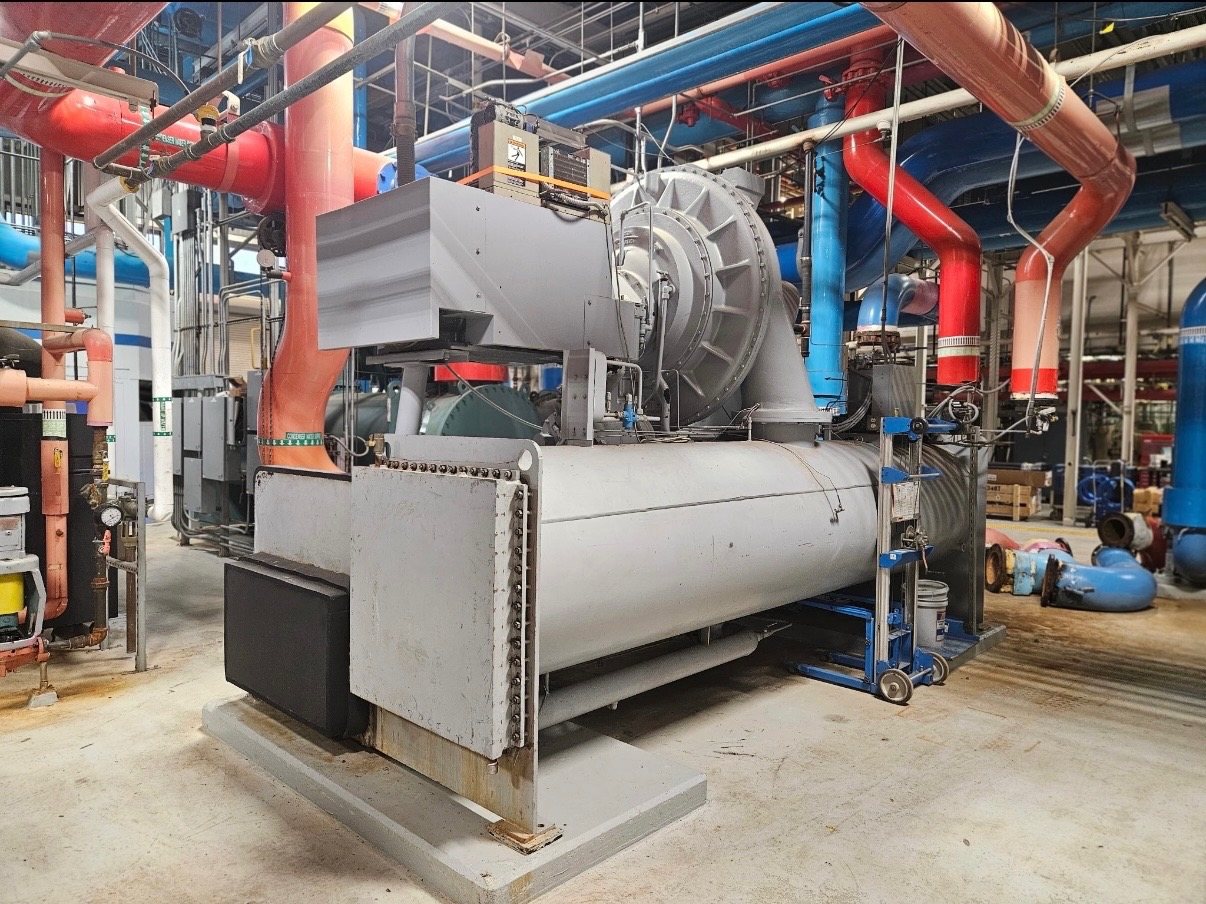
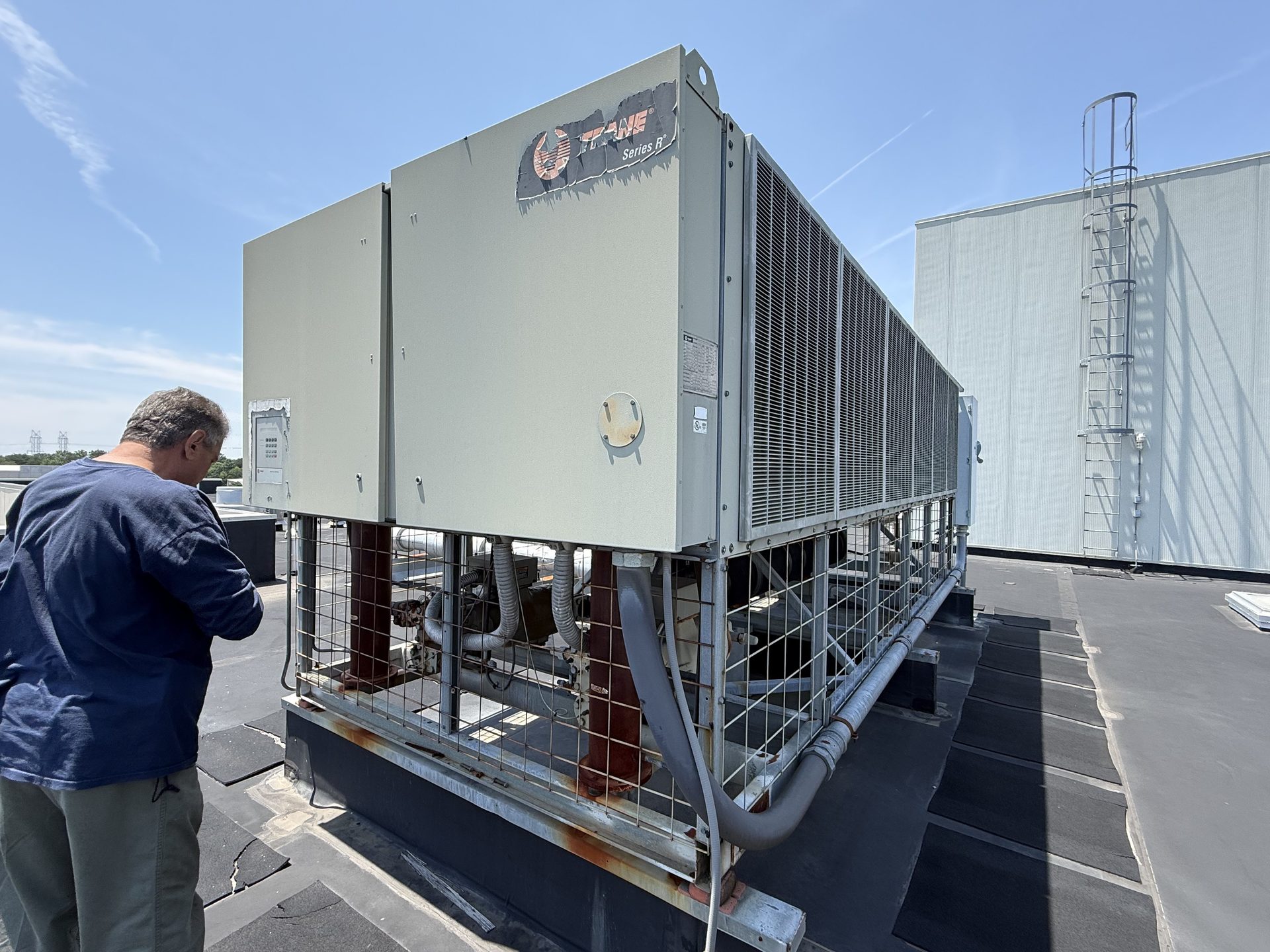
Have a surplus industrial chiller in Louisiana to remove? We are chiller buyers, and a test run is not required to request an upfront cash offer. The buyer handles crane service, rigging, disconnects, refrigerant recovery, loading, hauling and freight. Share the machine's visible details and the site's known restrictions so the work can be coordinated with authorized personnel.
When the history is incomplete
Describe the condition you can actually observe: visible corrosion, missing covers or controls, known damage, or whether the machine has been idle. Provide maintenance records if they exist, but do not infer a working condition from an old invoice. No equipment test is required for a cash offer, and a seller should not start the unit or open electrical or refrigerant components to collect information.
Match the plate to the unit
Before compiling an equipment list, check whether the record identifies an individual chiller or the whole plant. Send the buyer the safest available photograph of the actual unit and its label, together with any matching schedule. A plate that is obscured or missing can be described honestly; do not remove a cover or enter a restricted area to obtain it.
Two very different measurements
When a record says tons, ask whether that figure describes cooling output for one unit or for a group. It is not the load weight for rigging. Supply physical dimensions and a documented shipping or operating weight if known, and specify whether protrusions and separate cabinets are included. If the document does not say, let the buyer know rather than filling the gap with an estimate.
Define the purchase scope
For a multi-unit property, separate the inventory by building, room and machine. Include the plate details and any separate components that are safely identifiable, and distinguish what is being offered from equipment still needed on site. The buyer can then discuss the actual scope and handling requirements without treating a building-wide cooling figure as a single unit's capacity.
Refrigerant records and recovery
Tell the buyer whether a refrigerant designation comes from a nameplate, a later conversion label or a service record. If the source is missing or the charge is unknown, say that plainly. The buyer handles recovery with qualified personnel. There is no reason for the seller to fit gauges, open a valve, mix refrigerants or release any contents.
What remains connected?
Do not assume a nearby pipe can be drained just because the chiller is surplus. Other equipment may use the same loop, and a process line can require site-specific precautions. Share existing labels and drawings, or note that the contents are unknown. The buyer handles the disconnect work with qualified personnel and the facility's authorized team.
Electrical information for the team
Power information belongs in the inventory even when the chiller is already idle. Share a safe photo of the rating plate and existing electrical drawings if available; identify separate controls and missing information. The buyer handles electrical disconnects through qualified personnel, coordinated with the site's authorized staff. The seller should not switch, probe or dismantle electrical components to prepare for an offer.
Access and operating constraints
Before removal, define what stays in service and who can authorize work at the property. Existing site rules may cover escorts, work windows, protected areas or shared utilities. The buyer arranges the removal team and coordinates with authorized personnel; the site supplies its requirements. Any window discussed is a planning input, not a promise that a particular date will be available.
Information for the rigger
A clear ground-level view does not guarantee a clear lift: overhead services, structural limits and the available crane position also matter. Send the buyer what the site knows about those constraints, along with documented dimensions and weight. Professional riggers arranged by the buyer develop the equipment-specific plan. Do not tie on lifting gear or attempt to shift the chiller yourself.
From the chiller to the loading area
For an accurate removal discussion, include the street address, equipment location and the site's preferred truck entrance. A door measurement is useful, but the path can also be limited by a turn, low ceiling or floor transition. Describe known obstacles and share photographs where permitted. The buyer's riggers evaluate the route rather than assuming that the chiller will move intact.
Start with the property
For a chiller anywhere in Louisiana, provide the actual street address and the building, yard, mechanical room or roof where the equipment sits. The city and parish help identify the property, but the gate, internal route and loading area determine how the buyer's team can reach it. Mention known access restrictions or a preferred site contact; if the location details are incomplete, say what remains to be confirmed.
Loading and the road out
After the machine leaves its installed position, it still needs a safe staging place and a truck-accessible loading area. Share the location of gates, internal roads and any known overhead or vehicle restrictions. The buyer coordinates loading, hauling and freight. The freight team will evaluate the actual load dimensions and route rather than assuming that a nearby highway solves access inside the property.
Start with what you know
Begin with the information that is readily available: a nameplate photo, an overall view, the equipment location and a description of access. The buyer can make an upfront cash offer without a test run. Point out missing records and any equipment that must remain; questions about the removal scope can then be resolved with the site before work is arranged.